

How the University of Notre Dame RecSports turns student employees into confident, capable leaders.
At the University of Notre Dame, recreation is only part of the mission. Behind every fitness class, intramural game and facility improvement is a broader goal: help students become more confident, connected and capable versions of themselves.
This overarching goal is showcased in the Office of Recreational Sports’ (RecSports) mission statement: “Recreation has the power to enrich the collegiate experience, and RecSports strives to inspire opportunities for growth, fellowship and building lifelong habits that complement the development of mind, body and spirit.”
That commitment to student development can be seen across every corner of the department.
Through mentorship initiatives, student employment, leadership development programs and intentional facility design, RecSports creates opportunities for students to find community and develop skills that last long after graduation.
Across campus, RecSports operates four facilities — the Duncan Student Center’s Smith Center for Recreational Sports, the historic Rockne Memorial Building, Ricci Family Fields and the Notre Dome in the Joyce Center — each offering its own blend of recreation and competition space for students and staff.
But according to Mark Williams, the director of RecSports at the University of Notre Dame, what actually makes those spaces work isn’t square footage but the people running them.
“Each of the people in our department brings something different to the team, but they all have the same five qualities: they’re good people, they’re all knowledgeable, they all have a desire to work with students, they’re good teammates, and they want to be here and do their job,” explained Williams.

This shared commitment is what RecSports leaders say truly defines the department. While each individual space offers unique opportunities, they’re all designed to serve a larger purpose: creating places where students can connect, belong and grow.
This kind of intentional student development is also seen through many RecSports programs.
One standout program is Fit Academy, a course to help students overcome hurdles along their path to becoming fitness professionals.
“For many students, the cost and solitary nature of the certification process can feel overwhelming,” said Kaitlyn Kyger, the assistant director of Fitness Programs. “For others, passing an exam isn’t the challenge. Students often feel they lack the practical confidence to apply textbook theories to real-world scenarios.”
Fit Academy offers both group fitness instructor and personal training courses to help students prepare for certification exams. Each course consists of a self-study curriculum, in-person workshops and hands-on experiences in the fitness industry.
The hands-on component consists of not just shadowing but a progressive immersion into the role. Applicants start as student teachers, working with people in a controlled environment where the primary goal is to educate on the job.
For group fitness applicants, students start with a weekly teaching experience and end with a final audition showcasing their ability to manage the flow, music and safety of a full class.
Personal training applicants have their own syllabus and outline. Students are required to complete at least five mock training sessions with a staff member acting as their client, allowing them to practice fitness assessment and designing programs.
While the program helps students in their professional fitness journey, it was also designed as a recruitment tool for the department. Almost every student who completes the workshops and exams joins the team the following semester.
“We noticed many of our best candidates were students already attending our classes and wanting to emulate the instructors they looked up to,” said Kyger. “The most effective way to build a team was to invite those students into a mentorship program where they would be directly trained by the very professionals they aspired to be.”
This emphasis on mentorship extends well beyond Fit Academy. Across RecSports, student development is built into the department’s culture through formal mentorship programs, leadership opportunities and student-led initiatives.
“A major contributor to RecSports’ evolution is the rise of mentorship programs across the department,” said Williams. “These groups have experienced increased participation over the past few years, and our students have built better relationships with one another.”
The Mentor-Mentee program is an opt-in model focused on the belief that students are part of something bigger than themselves. The team pairs veteran leaders — known as Managers on Duty (MODs) — with newer staff to facilitate a more natural transfer of both personal and professional knowledge and experiences through pop-up opportunities, weekly discussions and more.
In the past year, the department has started to introduce a leadership series for managers, which not only continues to emphasize younger staff but also focuses on the managers’ own development as leaders.
“For us as professional staff, this is our minor league system,” said Kyle Osburn, the assistant director of Sport Programs. “We can’t continue to grow and enhance our programming and expectations if we don’t take the time to teach our students and allow them to teach us.”

RecSports’ commitment to student development is rooted in the idea that growth isn’t a one-way process. Students are also encouraged to help shape the future of the department through the Campus Recreation Advisory Board.
Now in its third year, the board brings together student leaders from across RecSports to discuss department initiatives, gather feedback from their peers and identify growth opportunities.
“Since the Campus Rec Advisory Board has been ingrained in the department, we’ve seen a transformative shift in how students perceive and engage with our mission, vision and values,” said Kayla Oloffson, the coordinator for RecSports Student Engagement and Outreach. “It’s boosted students’ understanding of the department, increased student engagement and fostered a desire to be involved.”
A group of around eight to 12 student leaders is appointed to the board each year, connecting with professional and student staff during monthly meetings to discuss large-scale initiatives for the department.
One important aspect of the advisory board is that students work outside of their program area, helping them to see the big picture of RecSports and moving beyond specific roles to understand how the team works together.
“These students are catalysts for change, collecting feedback from their peers, implementing appreciation events for student staff and gaining a deeper understanding of the department,” said Oloffson. “The idea is to expand the Campus Rec Advisory Board’s knowledge among our student employees.”
Oloffson said the team is developing a specialized onboarding program for mid-semester hires led by board members, immediately establishing a peer point of contact and helping new hires feel connected from the start.
Student employees, advisory board members and even the Student Government are all essential to planning within the department. With students being the core users, they provide a unique perspective on daily operations.
“Students bring life to our campus and see our facilities and programs through lenses we might not use because we’re around them each day,” said Williams. “Our role is to pay attention, understand what matters to them and make thoughtful choices about where to invest our resources.”
One recent example of a response based on student feedback is the installation of updated selectorized machines and added platforms to accommodate safe deadlifting at Rockne Memorial.

Multiple RecSports’ programs received another piece of feedback to adjust shift times to better align with student schedules. For example, Oloffson explained how students suggested splitting three-hour shifts in half. This change not only helped staff members pick up more shifts but also reduced the likelihood of schedule gaps on less-desired shifts.
Sometimes feedback points to something less obvious than equipment or operations.
“Students are looking for a ‘third place’ on campus — a space that bridges the gap between their academic classrooms and residential halls,” said Oloffson. “We realized students want a sense of belonging on campus, not just a gym.”
Campus rec centers can be intimidating for many students, especially those in their first year. To combat this, Oloffson said the team reconfigured the Smith Center and added lounge chairs, communal tables and private desk pods.
“This creation of a holistic recreation hub has created space for everyone, especially for students who weren’t using the facility for its original intended purpose,” said Oloffson. “We’ve enjoyed seeing students use these areas of the Smith Center, finding a place on campus where they belong and feel safe being who they are.”
When it comes to specific trends, the team works to distinguish fads from core needs by looking at usage over the years rather than just observing use in one semester.
This helps to avoid niche requests while still addressing systemic demands, like the need for more functional fitness equipment. An important factor when considering requests is whether it aligns with the department’s philosophy of creating inclusive, non-intimidating workout environments.
A core goal for the RecSports team is eliminating redundancy. “High-energy areas are balanced by a recharge zone dedicated to quiet focus, meeting the full spectrum of user needs,” said Oloffson. “Rather than dispersing underpowered versions of the same equipment across facilities, we centralize specialized resources. This allows us to create high-impact hubs within multi-purpose spaces designed for our campus communities.”
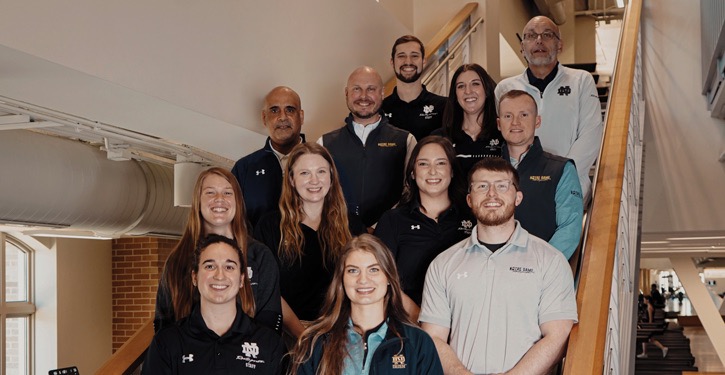
While facilities, programs and student initiatives all contribute to the RecSports experience, Williams said the foundation of their success is the culture that exists between professional staff and student employees. Every member of the department brings different experiences and expertise to the team, but they share a common commitment to working with students.
“Student staff is our heart,” said Williams. “Professional staff can’t be present for every facility opening, game, program or emergency. Our students keep us afloat.”

Williams explained how student staff within the RecSports department are eager to learn and understand the why behind their work. Mutual respect between student and professional staff grows every day, with the team recognizing there’s always more to learn.
Recognition is also woven into the department’s culture. Rather than limiting appreciation to annual celebrations, RecSports intentionally highlights student contributions throughout the year through monthly awards, graduation cords and appreciation events.
Students from each program area are recognized with Employee of the Month awards. Professional staff nominate students, vote on a winner and then show them off through a website article and social media posts. All nominees are notified of their nomination and thanked for their hard work.
The team launched the first RecSports Service Graduation Cord this year, an honor awarding graduating staff members who consistently demonstrate their commitment to the department. To earn a cord, students must demonstrate multi-semester service, pursue promotional growth and receive professional endorsements.
“This year, we awarded 66 seniors with graduation cords,” said Oloffson. “With infectious enthusiasm, they create a positive environment that fosters engagement, inclusion and camaraderie.”
Recreation may be what initially brings students through the doors of a RecSports facility. For some, it starts with a workout, an intramural team or a part-time job. Over time, however, those experiences often become something more — a chance to build confidence, find community and develop skills that extend far beyond campus.
For Notre Dame RecSports, that outcome is the ultimate goal.