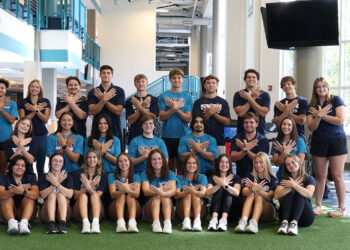



Campus recreation departments at Sacramento State University and Montclair State University are blending quantitative metrics with personal narratives to make more informed decisions and better support student well-being.
For many campus recreation departments, data has become a critical tool for understanding student behavior and refining programs.
But what data looks like has expanded far beyond swipe-ins or participation counts. Campus rec departments around the country are combining quantitative metrics with deeper qualitative insights to build a more complete picture of how students engage — and why it matters.
Using Storytelling to Inform Decisions
At The WELL at Sacramento State, that range is vast. Different program areas gather data in ways that uniquely reflect their needs: group fitness collects immediate feedback after classes, intramural sports gather feedback on a semesterly basis and the climbing center may send out a satisfaction survey at the end of a competition. Even within daily operations, the staff relies on door counts, check-ins and open feedback forms.
“All of this data helps inform short-term decision making as well as long-term decisions,” said Andrew Reddish, the director of The WELL at Sacramento State. “We appreciate it all, whether it’s positive, neutral or constructive feedback.”
But numbers alone don’t tell the full story. In recent years, Reddish said The WELL has made a concerted effort to collect personal stories from members to better understand the emotional and holistic impact of its services. The team has added open-ended questions to surveys, hosted focus groups and followed up when students share meaningful experiences.
While Reddish doesn’t deny the importance of quantitative data, he stressed how stories can provide more of a look into the effectiveness of certain programs or services, and their ability to offer context statistics alone cannot capture.
“High numbers can make you proud and give you something to point to, but a positive story can leave you understanding why you do what you do,” he said. “As the scientist Jennifer Aaker said, ‘Stories are up to 22 times more memorable than facts alone.’”
Blending Qualitative Feedback with Quantitative Data
At other institutions, similar efforts are shaping how campus recreation leaders make decisions.
When it comes to quantitative data, Romayne Eaker-Kelly, the deputy director of Athletics and Recreation at Montclair State University, explained how her department relies heavily on participation and demographic data to analyze facility usage, program engagement and user trends over time. Metrics such as swipe-ins, time-of-day patterns and unique users help guide scheduling and staffing. Demographic information, including gender, residency and class year also paints a picture of who the department is serving — and who might be missing.
Participation is tracked through a combination of check-ins and membership systems that automatically categorize users. Tools like Fusion and Tableau allow staff to see usage patterns across semesters, compare growth and identify peak times that may require additional staffing or adjusted operating hours.
When quantitative metrics are paired with direct feedback, the insights become even more actionable. A 2023 satisfaction survey, for example, revealed the need for additional squat racks. Attendance data confirmed heavy traffic during peak hours, validating the investment.
These insights aren’t theoretical — they directly influence everyday decisions. Facilities have shifted operating hours based on peak usage periods, staff scheduling and maintenance routines shift during high-traffic months, and participation data highlights underrepresented groups.
The Challenges Facing Data-Driven Decision-Making
Still, collecting and analyzing data comes with its challenges. Missing demographic information can limit understanding of user diversity. Different software systems for programs, attendance and surveys don’t always integrate smoothly. Seasonal fluctuations — such as exam periods or holidays — complicate semester-to-semester comparisons. And like many campus rec teams, staff capacity plays a significant role in how much analysis is realistically achievable.
Despite the obstacles, both Reddish and Eaker-Kelly emphasized that building a data-informed culture doesn’t have to be overwhelming. Tracking a handful of simple metrics — whether it’s peak times or basic demographics — can create a strong foundation for deeper insights later. Adding qualitative elements can provide a crucial human layer that interprets the “why” behind the numbers.
“I would recommend other campus rec departments look into story collection, whether it’s an ongoing open form, conducting focus groups or embedding opportunities for collecting stories in a larger survey,” said Reddish. “We might not be able to get information about the impact of the department if we just called an event with higher participation than last semester a success.”
Expanding Data Strategies
Looking ahead, both institutions hope to expand their data strategies. Sacramento State plans to continue refining its story-collection efforts to elevate student voices, while Montclair State is exploring ways to integrate survey results with attendance data and expand demographic tracking to better support equity goals. Automated dashboards, real-time reporting and deeper analysis of equipment usage are also on the horizon.
Across these efforts, one theme is clear: data-driven decision-making in campus rec is no longer about simply counting the bodies that walk through the doors. It’s about understanding experiences, identifying needs and translating information into action to support student well-being. When departments pair numbers with narratives, they not only gain operational insights but a deeper understanding of who they serve.