

• Home
  • Subscribe
  • E-Newsletter
  • Podcast
  • Media Kit
  • Contact
  • Login
Campus Rec Magazine
  • Sections
    • Columns
    • Facility Development
    • News
    • Operations
    • Programming
    • Rec of the Month
    • Staff Development
    • Well-being
    • Profiles
  • Magazine
    • Current Issue
    • Past Issues
    • Subscribe
    • E-Newsletter
    • Contact Us
  • On-Demand
    • Exclusive Interviews
    • Podcast
    • Webinars
  • Supplier Insights
    • Brand Voice
    • Supplier News
    • Supplier Voice
    • Spotlights
  • Education
    • CR Leadership Summit
    • 2026 Campus Rec Leadership Summit Trends Report
    • CR Base Camp
    • Pickleball Innovators
  • Buyer’s Guide
No Result
View All Result
  • Sections
    • Columns
    • Facility Development
    • News
    • Operations
    • Programming
    • Rec of the Month
    • Staff Development
    • Well-being
    • Profiles
  • Magazine
    • Current Issue
    • Past Issues
    • Subscribe
    • E-Newsletter
    • Contact Us
  • On-Demand
    • Exclusive Interviews
    • Podcast
    • Webinars
  • Supplier Insights
    • Brand Voice
    • Supplier News
    • Supplier Voice
    • Spotlights
  • Education
    • CR Leadership Summit
    • 2026 Campus Rec Leadership Summit Trends Report
    • CR Base Camp
    • Pickleball Innovators
  • Buyer’s Guide
No Result
View All Result
Campus Rec Magazine
No Result
View All Result
Home Facility Development

LEEDing the Green Revolution

Kayla Boyd by Kayla Boyd
August 11, 2015
in Facility Development, News, Operations
0
LEEDing the Green Revolution
Share on FacebookShare on TwitterShare on LinkedIn

As a nation actively trying to reduce its carbon footprint, it only makes sense that universities and colleges get in on the action and receive recognition for their efforts. That’s where LEED comes in.

LEED, or Leadership in Energy & Environmental Design, is the nation’s leading advocate of sustainable design. LEED promotes a building certification program that rewards environmentally friendly construction.

To receive LEED certification, buildings must satisfy prerequisites to earn points. The more points accrued, the higher the certification. Through use of low environmental impact materials and design methods, as well as giving special attention to natural lighting, low maintenance landscaping and other environmentally sensitive products and designs, buildings can be awarded silver, gold or platinum certifications.

The University of Arizona Student Recreation Center became the first platinum-certified facility in 2010 after adding a 54,000 square foot structure. The university originally targeted the silver certification, but easily accrued enough points to receive the gold certification. Once construction began, the team realized that the additional points required to receive platinum were manageable. The university received the platinum certification and overstepped the requirements by four points.

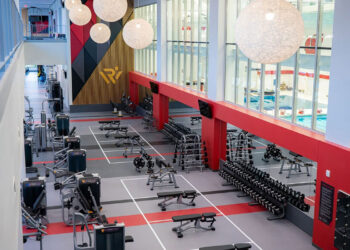
With the facility’s impressive energy efficiency, the platinum certification is fitting. The structure has passive solar measures such as optimal building orientation that allows daylighting in 99 percent of the occupied spaces, opaque walls on the east and west sides, deep roof overhangs and 54,000 square feet of cool roofing. Smart synchronization saves nearly 51 percent of energy costs. Using local materials and recycling construction waste were several ways the university increased their points.

Eastern Washington University (EWU) initially catered to the silver standards while renovating the University Recreation Center in 2008. The structure itself includes masonry and metal panel with metal and membrane roofing. It utilizes natural lighting, water saving efforts and energy efficiency. All the way down to dual flushing toilets, waterless urinals, motion-censor lighting in offices and automatic faucets, the facility is as green as can be.

As it turns out, EWU was so close to receiving the gold certification; they put off the inspection, spent some extra money, and passed on the silver.

Jamie Gwinn, URC operations manager at EWU, said that although the gold certification cost the university extra money and several more months of construction time, the incentive was there. “Being a state institution and using student dollars, we wanted to create a minimal environmental footprint,” he said. “We tried our best to minimize the footprint on the environment and do everything we can not to create more waste than what we need.”

When asked whether the money and time spent were worth it, Gwinn said it depends on the individual facility. “While the novelty of going green is a good thing and it can be a very good thing for some places, other places aren’t even really looking at it,” he said. “It just depends on the facility and the geographical area. Overall it’s a good thing to try to do, going back to the footprint, but it’s a lot of preferences.”
 

Previous Post

Expansion on the Horizon for Towson University Recreation

Next Post

Technogym Teams Up With Professional Baseball Athletic Trainers Society

Kayla Boyd

Kayla Boyd

Kayla is a Writing Intern for Campus Rec Magazine. She can be reached at kayla@peakemedia.com.

Related Posts

campus rec facility maintenance
Facility Development

The Importance of a Proactive Approach to Campus Rec Facility Maintenance

August 27, 2026
Mt. Hood Community College
Facility Development

Expanding Aquatics Without Increasing the Footprint

July 28, 2026
campus rec locker rooms
Facility Development

Privacy, Safety and Accessibility: How Campus Rec Locker Rooms Are Evolving

July 9, 2026
The 2027 Campus Rec Leadership Summit Heads to New Mexico
News

The 2027 Campus Rec Leadership Summit Heads to New Mexico

July 8, 2026
Cardio Equipment Trends Reshaping Campus Recreation
Facility Development

Cardio Equipment Trends Reshaping Campus Recreation

June 30, 2026
campus recreation flooring
Facility Development

Campus Recreation Flooring Decisions That Improve Safety, Durability and User Experience

June 25, 2026
Next Post
Technogym Teams Up With Professional Baseball Athletic Trainers Society

Technogym Teams Up With Professional Baseball Athletic Trainers Society

Leave a Reply Cancel reply

Your email address will not be published. Required fields are marked *

Get Updates in your inbox

SUBSCRIBE NOW!
Facebook Twitter Instagram LinkedIn
Campus Rec Logo

The premier business resource for college and university recreation centers.

The Current Issue

The Current Issue

July/August 2026

Browse

  • Home
  • Subscribe
  • E-Newsletter
  • Podcast
  • Media Kit
  • Contact

© 2026 Campus Rec Magazine. Published by Peake Media.

Welcome Back!

Login to your account below

Forgotten Password?

Retrieve your password

Please enter your username or email address to reset your password.

Log In
No Result
View All Result
  • Sections
    • Columns
    • Facility Development
    • News
    • Operations
    • Programming
    • Rec of the Month
    • Staff Development
    • Well-being
    • Profiles
  • Magazine
    • Current Issue
    • Past Issues
    • Subscribe
    • E-Newsletter
    • Contact Us
  • On-Demand
    • Exclusive Interviews
    • Podcast
    • Webinars
  • Supplier Insights
    • Brand Voice
    • Supplier News
    • Supplier Voice
    • Spotlights
  • Education
    • CR Leadership Summit
    • 2026 Campus Rec Leadership Summit Trends Report
    • CR Base Camp
    • Pickleball Innovators
  • Buyer’s Guide

© 2026 Campus Rec Magazine. Published by Peake Media.