


At the University of San Diego, the new Palomar Health Student Wellness Center has been dubbed as the new heartbeat of campus, with 80,000 square feet dedicated to wellness that’s radical, inclusive, student-driven and deeply human.
In Spring 2025, the Palomar Health Student Wellness Center (Center) opened at the University of San Diego (USD).
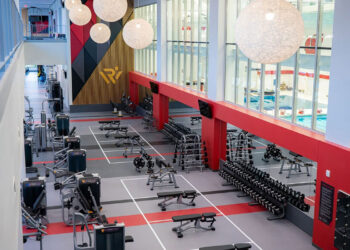
The facility offers 80,000-square-feet of indoor space and 69,000-square-feet of outdoor space, all of it dedicated to the wellness of the campus population. Fitness offerings include multi-use spaces and rooms for everything from martial arts to fitness classes; 10,000-square-feet of fitness equipment and free weights from Matrix Fitness, BeaverFit, Peloton, VersaClimber and Precor; basketball courts, an outdoor fitness gym, a bouldering wall and more. The Torero Gaming and Engagement Lounge features console and PC gaming stations, board games and tabletop game sets, and programs based on community building and digital wellness.
However, one standout aspect of the Center is its Wellness Wing. This section of the facility is dedicated to supporting mental and emotional resources. There is 10,000-square-feet for services, classes and collaboration. Here, students can receive health and wellness counseling and consultations. There are Rejuvenation Labs that feature infrared PEMF mats, meditation swings and nap pods. Students can participate in an art therapy zone, use a telehealth sound-proof booth, grab something from the juice bar or attend an event at the teaching kitchen.
“The development of the Palomar Health Student Wellness Center was driven by student input, national wellness trends and an intentional desire to create a multidimensional wellness space — one that meets physical, mental, emotional and social needs,” said Kimmel Yeager, the executive director of the Center.

A New Standard for Wellness
In fact, Yeager shared the Center sets a new standard for inclusive wellness resources by broadening the scope of wellness. Inclusive social lounges and esports/gaming spaces bring in those not drawn to traditional fitness. Plus, the facility integrates low-stimulation zones, calming aesthetics and acoustically dampened rooms to support students seeking a quiet moment or two.
“We also host twice-daily sensory sensitivity hours during which lights are dimmed, music is softened and a serene, meditative atmosphere is curated, making the space truly welcoming for all sensory needs,” said Yeager.
Instead of traditional locker rooms, the center offers a locker lounge and private suites, complete with individual dressing stalls and showers. Wellness is even found in the products used in restroom and hygiene areas which are dye-free, fragrance-free and eco-conscious. All these choices were made to align with the university’s vision.
“Guided by USD’s Thriving Student model, we have placed a strategic emphasis on upstream wellness — focusing on early, proactive approaches that support students’ ability to flourish through their time at USD,” said Serena Gandara, the director of Campus Recreation. “From inclusive fitness and mindfulness opportunities to skill-building programs that foster social connection, our offerings are designed to help students thrive throughout their time at USD and beyond.”
As such, the student response to the new center was crucial. Yeager reported in the first six weeks of opening they had more check-ins than in the entire previous 7.5 months. In fact, daily check-ins have increased by 100%. She’s also heard students frequently describing the facility as the new heartbeat of campus. “Many have shared they feel seen and supported in a way they haven’t before in a recreation environment,” she noted.

Programming with Wellness in Mind
Beyond the new facility, programming is also lending itself toward the wellness goal. The Center for Health and Wellness Promotion (CHWP) located in the Wellness Wing offers metal health check-ins. Students fill out a screening tool and briefly check-in with a counselor. Each offering is unique in its theme and supplementary offerings. For example, in May 2025 the mental health check-in was called Boba Break. Students were given a boba drink and origami to create while they waited for their counselor appointment.
CHWP also puts on the Nourish to Flourish program. During the week before finals, daily activities are offered, from Love On A Leash therapy dog partners or a sound bath to bingo night on the court or an ice cream social on the wellness terrace, complete with a self-care affirmation board.
In addition to the deliberate wellness programming, the idea of inclusive wellness by having something for everyone can be seen in their other offerings as well. For example, Gandara shared they fully embrace their coastal environment at USD via aquatics programs that inspire adventure, skill-building and community connection. “Our students have countless opportunities to engage with water in meaningful ways,” she said.
The outdoor pool and expansive pool deck allow for activities like masters swimming, youth swim development year-round, water polo, competitive swim, etc. Students can also participate in paddleboard, kayak and canoe excursions, lifeguard training, and SCUBA certification. “Whether learning new skills or diving deeper into aquatics recreation, our programs invite all to explore, grow and thrive through water-based experiences,” said Gandara.

Radical Hospitality
In order to achieve their radical goal of wellness, both Gandara and Yeager noted they need radical hospitality. That starts first with the professional team.
“The Campus Recreation staff members are educators, mentors, innovators and connectors — committed to building a culture of radical hospitality, where every student feels welcomed, valued and inspired to grow,” said Gandara. “Our team’s strength lies in its diversity of skills and perspectives, its collaborative spirit, and its shared dedication to student development and well-being.”
Radical hospitality is also present in student employees. For the Center, front desk student staff complete over 25 hours of specialized training in hospitality, customer service and inclusive communication. All team members are trained in “three-foot hospitality” — if someone is within close proximity they are to acknowledge the guest with a smile and kind word to create a sense of true belonging. Thoughtful collaboration — like that with the CHWP — allow them to offer what Yeager called “surprise moments of care” during stressful periods.
Finally, Yeager said they intentionally exceeded traditional collegiate rec standards with amenities often found in premium health clubs: complimentary towel service, elevated personal hygiene products and on-floor fitness staff always available.
“This consistent, human-centered approach ensures everyone who walks through our doors feels seen, valued and respected,” said Yeager.
However, USD is just getting started in its expansive vision of wellness on campus. Yeager shared a brand-new home for Outdoor Adventures is on the horizon, with a full renovation of the Bosley Center. Plus, the launch of a Peer Wellness Ambassador Program will train students to be champions of well-being across campus.
Now and into the future, they are reimagining what wellness can be — which is radical, inclusive, student-driven and deeply human — via the new heartbeat on campus.