


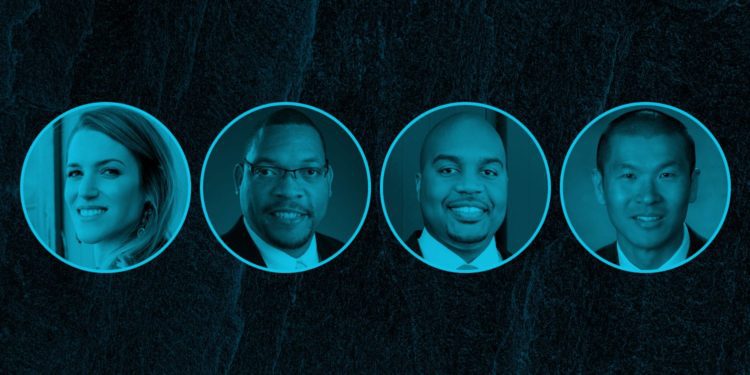
Last week, four panelists joined Campus Rec Magazine for the “Equity, Diversity and Inclusion (EDI): Creating Lasting Change” virtual roundtable to discuss actionable EDI steps they are taking.
The panelists were:
- Kevin George, the director of Campus Recreation at Rowan University.
- April Lovett, the director of Academic Health Data Library Programs at Florida State University (FSU) and a co-host of the podcast, “Success in Black and White,” which focuses on bridging the gap between racial boundaries.
- Darryl Lovett, the associate director of Campus Recreation at Florida State University and a co-host of the podcast, “Success in Black and White.”
- Demond Pryor, the director of Recreational Services at the University of Toledo.
They worked to answer several questions around current equity, diversity and inclusion practices in their departments, strategies to assist historically marginalized staff, how they are communicating their actionable EDI efforts, etc.
Below are the top takeaways from the discussion:
Question One: Would you please highlight two to three EDI practices you have in your department?
- George’s department conducts four “Realworld Connections” a year. The most recent one was a discussion on “Privilege” and the next is going to be on organizational culture. They have also tacked on a 40-minute discussion to their biweekly meetings to address EDI. Plus, a EDI committee was formed in 2020.
- Darryl applauded the fact that at FSU he can have discussions concerning EDI with his director and their EDI committee/work team, not just HR.
- One of the biggest things: Darryl said it’s been huge to see the willingness that now exists to work with the info and content on EDI that’s out there.
Question Two: How has your department moved past performative EDI to address real issues and create lasting change?
- Are you welcoming? Pryor asked this question, stating it’s not enough to be inviting. Welcoming could look like having a music selection that represents all participants who come into your facility, not just Top 40.
- April said it’s key to consider your own personal identities when doing this work.
- She also noted several lessons learned from a previous EDI taskforce she was part of, namely that performative change is not change that sticks. You have to get to the root, to dismantle issues in the systems.
- George shared they have a DEI Certificate Program at Rowan, did a “We are Not OK” healing series and are even looking to address issues like, “How are male patrons viewing and responding to female employees asking them to wear their masks?
Question Three: What strategies are being used to assist historically marginalized staff to be supported and allowed to thrive in organizations/departments?
- Darryl said he is seeing EDI positions everywhere; it’s time to maximize these. Plus, one needs to seek out and listen to marginalized voices on campus, creating channels to share and making sure your design/make-up is inclusive.
- Pryor noted his president said they are a university working to be anti-racist. As such, it starts with your leadership; they need to speak.
- Plus, he said feeling like others want you there is huge. Look at your department and note that it needs to look EDI.
- April called it out: If you’re not doing salary equity analysis, you’re doing a major disservice to these efforts.
Question Four: How are you communicating your efforts toward actionable EDI to participants?
- Pryor was honest and shared his department has growth to do in this. His heart though is that their words match up with their actions.
- Staff representation communicates how you feel about EDI, said Darryl, and it can impact how students talk about you to their friends.
- April reiterated to communicate through your actions.
- George noted a “secrete shopper” method might be helpful to see if you really are welcoming.
Question Five: What tools does your department use to measure or track efforts to create more inclusive and accessible environments for all identities?
- George said their EDI committee gave them a framework based on three goals for the department — think actively promoting EDI, ongoing assessment, etc.
- April noted you must aggregate your data and suggested checking out the RACI Chart.
Question Six: When considering a departmental committee, what are your thoughts on focusing specifically on racial equity versus a broader approach to inclusion? Or even running multiple groups at the same time?
- George noted a broader committee is important but suggested a subcommittee specific to anti-racism.
- April said something probably needs to come first. Start with what won’t tax your people but will still get the ball rolling.
Question Seven: How can lower-level staff impact their leadership and get actionable EDI buy-in?
- Darryl said first, it doesn’t matter if you’re in a lower-level staff position. If you’re on the team, you and your voice matter.
- Second, he said to initiate conversation. Don’t do it blindly though — prepare by putting your thoughts and your heart into bullet points so you can walk into the conversation well-equipped.