

Seven years in the making, the University of Pittsburgh’s 270,000-square-foot Recreation and Wellness Center represents a new era for campus recreation grounded in accessibility and intentionality.
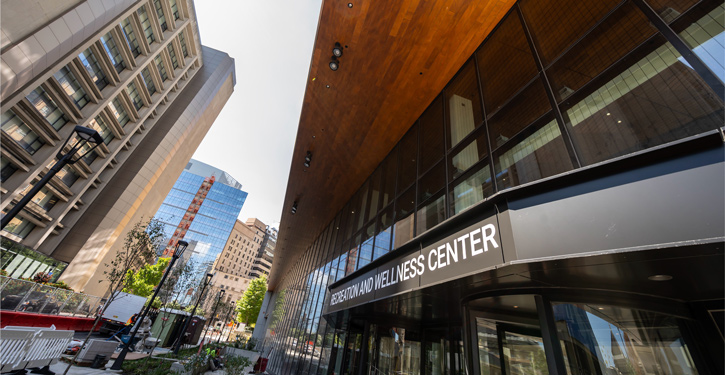
At the University of Pittsburgh (Pitt), the Recreation and Wellness Center (RWC) sits nine stories above O’Hara Street, but it’s true impact isn’t measured in height.
For decades, Campus Recreation at Pitt operated out of seven facilities spread across campus. The fragmentation made it challenging for students to locate recreation services. For example, the largest fitness area was located in Pitt’s basketball arena, which sat on top of the renowned “cardiac hill.” Particularly during Western Pennsylvania winters, the climb itself became a barrier.
A 2017 assessment conducted by Brailsford & Dunlavey revealed student satisfaction with recreation facilities was below 50%. The data confirmed what the department already sensed: access was an issue.
The RWC was built not only to replace outdated infrastructure but to fix foundational barriers to students’ engagement with recreation.
Now, the center serves as a physical bridge for students and a reflection of the department’s broader mission to increase inclusivity and expand recreation for the campus community.
Leveling Up Campus Recreation at Pitt
From the start, intentionality defined the project.
The nine-story facility is strategically located between Pitt’s lower and upper campuses, serving as a bridge for accessible movement across the university. The RWC houses all aspects of Campus Recreation — a stark difference from the previous decentralized experience.
“Transforming a relatively small footprint into a large, multifaceted wellness environment is a significant accomplishment and a testament to the vision, design and execution of the project team,” said Dorothy Stromdahl, the associate director of Facilities and Operations.
The RWC differs from other high-rise facilities where students can be limited to only a few floors. Each level of the center is fully accessible, creating a connected and engaging experience.
The facility layout itself is intentional, with many aspects reflecting current fitness and wellness trends.

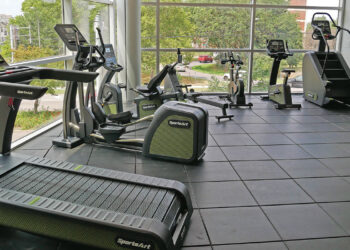
Fitness spaces are spread across seven floors and organized into distinct zones. Each is designed to deliver a boutique-style workout experience and allow students to complete a full routine without moving between areas. Strength training is located at the forefront of the facility, providing broad access to machines and free weights. Studio spaces combine equipment and technology to mirror off-campus experiences and centralize offerings.
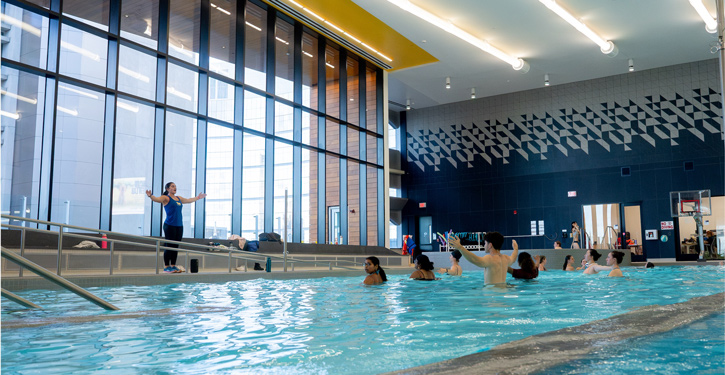
The facility also includes a state-of-the-art aquatics center on level five, a 49-foot climbing wall spanning from levels four to six and a cutting-edge esports room catering to growing student interest in gaming. The Sky Gymnasium on level eight provides versatile court spaces. Level nine features the Sky Track — an indoor track offering 360-degree views of Pittsburgh.
Pitt’s Stress Free Zone gives students a dedicated space to pause, recharge and develop practical tools for managing stress. The space includes quiet meditation zones and guided audio stations that support mindfulness practice, along with resources like biofeedback sessions that help students better understand how stress affects the body. Students can also take advantage of relaxation tools such as massage chairs and daylight therapy lamps, as well as workshops and experiences like sound baths.
Health and well-being are vital components of recreation at Pitt, with multiple wellness-based services housed throughout the RWC. A health-focused dining hall with three concept kitchens offers nutritious meals on level one, and the Wellness Suite on level eight — developed in collaboration with Student Health Services and the University Counseling Center — provides a reflection room, relaxation spaces and an outdoor terrace overlooking the Cathedral of Learning.
Together, these offerings highlight how holistic health at the RWC extends beyond fitness, supporting the mental, emotional and restorative well-being of the Pitt community.
Building the Team Alongside the Facility
Development of the RWC was no small undertaking. The seven-year timeline required patience and adaptability from the team, and the physical transformation mirrored an internal one.
Construction began in 2022 with an anticipated opening of October 2024. Delays, leadership transitions and the lingering impacts of the COVID-19 pandemic extended the timeline to September 2025, forcing the Campus Recreation team to rethink expectations while maintaining momentum.
“As we prepared to open the RWC, we reflected on nearly three years of construction following a design process which began in 2018,” said Stromdahl. “If we only focused on the outcome, the process would feel long and overwhelming. Instead, we made a point to acknowledge the small victories bringing energy to the project.”
Chris Marks, the executive director of Campus Recreation, explained the team wasn’t just developing a new building, but also shaping a new department. Throughout the design and construction phases, professional staff grew from eight to 20 members.
“Because of this rapid growth and turnover, the team is still learning to work together,” stressed Marks. “Our team is utilizing a work-style inventory and developing common terminology to better understand one another. We’ve also initiated a development series looking at core competencies and experiences to help employees advance in their career path.”
Stromdahl emphasized the importance of growing the team during construction, with early investment allowing each member to contribute to the building’s design and ensuring adequate time to prepare staff for a smooth transition.
“By growing the team earlier, we gave staff a head start in developing trust, shared expectations and a sense of collective ownership,” explained Stromdahl. “This investment helped the team weather the storm and emerge stronger and more unified on the other side.”
Emphasizing Accessibility and Inclusivity Through Programs
Accessibility at Pitt extends far beyond the RWC itself. Many Campus Recreation programs were developed with inclusivity in mind, like Private Offerings, which allow students to book their own group private campus rec experiences to avoid discomfort.
“By offering tailored, private programs, we removed common barriers such as intimidation, lack of familiarity or uncertainty about participation while also providing a service to support student organization engagement and community building,” said Brandyn Ott, the associate director of Wellness and Recreation programs.
Ott said the program’s impact has allowed Campus Recreation team to connect with students who hadn’t engaged with the department before and positioning the department as a supportive resource for well-being.

Another rec program created to alleviate fitness-related anxiety is Panther Fit. The high-energy strength interval class is designed with modifications and progressions to serve all skill levels, making it approachable for beginners while still challenging for advanced participants.
“Panther Fit is successful because it offers a high-demand format: students love efficient, results-driven workouts combining strength and intervals,” said Ott. “It fits packed schedules and delivers quick, noticeable benefits.”
The Learn to Ride 101 program also showcases the importance of accessibility for the Campus Recreation team.
Sarah Sleva, the assistant director of Outdoor and Adventure Pursuits, explained how the program began from hearing a student say they’d love to purchase a bike, but weren’t sure how to ride. This statement led to a collaboration with Bike Pittsburgh — a local non-profit organization — and the growth of a new program for students.
During the three-week course, students learn everything from adjusting their bike helmets to learning to steer. Once a participant passes the first class, they can move up to Learn to Ride 201 — a Confident City Cycling class where students learn more skills to ride with traffic. Afterwards, students take a three-mile loop around Pitt’s campus to put their knowledge to the test.
“Through the program, we were able to provide students with experiences they may never have had the opportunity, access or means to do so,” said Sleva. “We’re making an impact on these students in ways they can take with them in their future.”
A Project Defined by Patience and Resilience
Throughout the seven-year development of the RWC, Marks said the defining characteristic of the Campus Recreation team is patience and resilience.
“A key lesson was accepting the timeline of the ideal scenario of opening a new facility at the start of a semester isn’t always realistic,” stressed Ott. “Be prepared to pivot. Identifying what you can provide students in the short term helps reduce stress and keeps momentum moving forward until the facility is open.”
Stromdahl echoed Ott’s advice, emphasizing how the most productive approach is to stay centered on elements within your control — like developing a strong operational plan and staying engaged with the project team. She added how it’s vital to evaluate timelines and clarify what’s needed to open the facility in advance to keep the project moving forward without distractions.
Another key piece of advice from Stromdahl is to have all partners involved from the beginning of the project. “While it may seem like common sense, many facilities in our field are designed in silos without enough input fron the recreation professionals who will actually operate them,” she said. “This often results in inefficient layouts, higher operational costs and increased risk management concerns.”
Now fully operational, the RWC reflects these decisions. The centralized model simplified access, increased service visibility, and removed many of the physical and psychological barriers previously limiting participation.
For Pitt, this project was never solely about square footage. It was about repositioning campus rec as an essential component of student wellness. The RWC showcases how accessibility matters, student demand is impactful and wellness integration is no longer optional.
Most importantly, the RWC demonstrates how facility and department development should happen hand-in-hand. As campus rec professionals evaluate their own infrastructure and strategy, Pitt’s experience proves how department culture and vision are just as important as the center itself.