

From energy-generating equipment to creative funding, SportsArt is helping campus rec departments make sustainability achievable.
The current generation of college students is thinking green and there’s no hiding it.
From waste reduction to energy-efficient solutions, sustainability is a priority for many younger generations — making it a priority for many campus recreation departments, too.
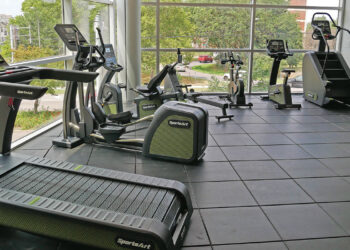
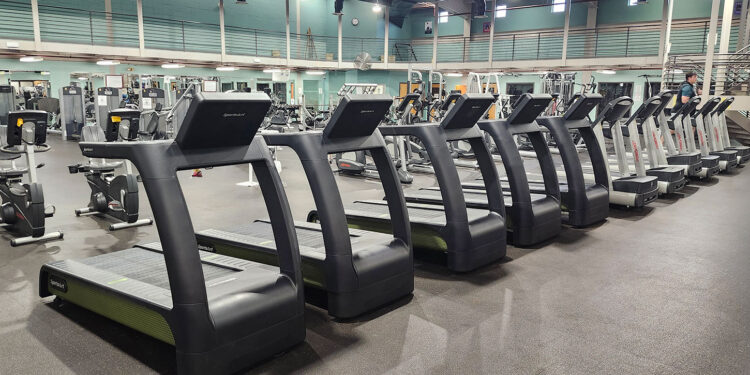
Since its inception in 1977, SportsArt has shared this commitment. With energy-generating cardio equipment, the company has built sustainability into the product itself. Recently, they’ve taken it a step further by helping campuses find creative ways to fund sustainability initiatives.
“It’s not only fitness,” said Ruben Mejia, the executive vice president for SportsArt Americas. “It’s also related to sustainability.”
This somewhat simple distinction became a gamechanger for campus rec departments struggling with budgets, opening doors they didn’t know existed.
Finding the Funding
Because SportsArt’s ECO-POWR equipment generates electricity while in use, Mejia explained how campus recreation departments may be eligible for sustainability-related grants that traditional fitness equipment won’t qualify for.
For example, the Student Green Energy Fund at the University of South Florida (USF) invites currently enrolled students, faculty and staff to turn eco-friendly ideas into formal proposals for outcome-driven projects to help USF’s campus conserve energy, reduce costs, lower greenhouse gas emissions and promote renewable energy technology.
As a result, USF was able to purchase 16 units of SportsArt equipment without using the campus recreation budget. “They can spend that money elsewhere, and money is already tight,” said Mejia. “They also get fitness equipment that’s actually related to the student population coming in.”
The University of North Carolina at Chapel Hill operates the school’s Renewable Energy Special Projects Committee, a student-run panel that manages funds to plan and implement energy-efficient projects on campus. The university was able to use some of the funds from the committee’s existing allocation for sustainable projects to purchase SportsArt equipment.
SportsArt is also working with Seattle University to come up with creative ideas for funding. Mejia said he and Al Grisby, the assistant athletic director for Development at Seattle University, have had conversations with corporate donors in the city about investing in campus sustainability initiatives.
“We’ve had conversations with folks on how the money from these corporations that are in Seattle can actually help fund these projects that are meaningful to students on campus,” explained Mejia. “There are all kinds of ways campus rec centers can get funding, because our fitness equipment fits into different categories than traditional cardio equipment.”
The Campus Challenge
To help more campus rec departments achieve sustainability goals, Mejia said the SportsArt team developed their own form of creative funding through the annual Campus Challenge.
The Campus Challenge is an annual sweepstakes open to higher education institutions in the U.S. and Canada. This year, SportsArt is giving away up to $145,000 in energy-generating fitness equipment to three different winners.
Signing up is simple. Any student or faculty member can fill out a form for one entry. The more entries for the school, the higher the chances of winning. SportsArt then shares digital assets with the schools to help departments promote the initiative.
Not only does the Campus Challenge get students involved with campus recreation, but it also helps departments with tight budgets who want to implement eco-friendly solutions.
“We’re giving this money away so more students can enjoy this type of fitness equipment, and so more campuses can participate in different ways to achieve their universities’ carbon-neutral goals,” said Mejia.
In just its third year, the Campus Challenge has made a meaningful impact on institutions of all sizes.
Mejia said he met Tara Rouse, the director of the Wellness Center at Pearl River Community College, before the 2025 challenge. She had expressed concern about being a small school with a tight budget, but Mejia reassured her she could still win.
“She ended up winning the grand prize last year,” explained Mejia. “She and the students were so thankful. We were able to help the school that didn’t have the funds to have our equipment and participate in something greater than just burning calories.”
Using SportsArt Equipment as an Engagement Tool
Beyond the Campus Challenge, SportsArt has helped campuses think creatively about how to use energy-generating equipment by turning everyday workouts into events, driving students through rec center doors for a purpose beyond exercise.
Mejia said his team helped set up a challenge where a campus rec center aims to generate enough electricity to offset the air conditioning for a day, and a fundraiser where every watt-hour generated translates to a dollar donated.
At York University, the Power Play Challenge took three teams — athletes, staff and fitness enthusiasts — and had them use SportsArt treadmills and steppers to see who could produce the most electricity. They livestreamed the whole thing with student broadcasters, drawing in an audience that may not have visited the rec center otherwise.
“They had all these people involved at the campus rec center just to generate electricity and have a fun event,” said Mejia. “There are all kinds of ideas we can share at SportsArt to help spark an idea that may be relevant at your campus.”
The Bigger Picture
Looking forward, Mejia said the SportsArt team will continue providing eco-friendly solutions for higher education through the Campus Challenge and other work with universities nationwide.
“This kind of engagement matters because a lot of the younger generation nowadays really cares about making a difference and improving the earth,” explained Mejia.
Mejia said his team plans on certifying more equipment so users can see when that piece of equipment will hit carbon neutrality, adding something else for universities to share when discussing eco-friendly solutions.
Beyond campus sustainability, SportsArt plans to focus on inclusive equipment and making fitness accessible for everyone in the coming years, along with a partnership event with Red Bull planned for summer 2026.
“We’re going to continue with our sustainability goals and our mission to make the world a better place with every workout,” said Mejia.