


How multifunctional pools, improved air quality and mission-driven planning are reshaping campus rec aquatics design across the country.
Campus recreation aquatics centers have historically been designed with a specific purpose: to accommodate lap swimming, offer swim lessons and host occasional competitions. However, in recent years, that model has undergone rapid change.
As departments reassess how every square foot can better serve students, they are reimagining aquatics facilities as flexible, year-round environments that support everything from wellness programming to adaptive recreation. Driven by sustainability goals and student needs, aquatics architecture is no longer just about the water; it’s about versatility, longevity and impact.
Below, discover the trends and challenges campus rec aquatics design teams are navigating and how they’re prioritizing multifunctional spaces and sustainability.
Aligning Campus Rec Aquatics Design with Department Priorities
For many departments, campus rec aquatics design does not begin with pool dimensions or mechanical systems, but rather a mission. As campus rec is increasingly tasked with supporting student wellness, belonging and inclusivity, aquatics facilities are being designed to reflect institutional values as much as operational needs.
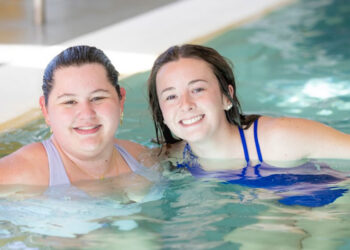
At San Francisco State University (SFSU), the campus rec department aligns itself with the university’s core values: inclusion, empowerment, and opportunities for learning, community and wellness. The natatorium sits within a bright, welcoming space designed to promote physical activity and social connection. It features a lap pool, an activity pool for recreational use and classes, and a hot tub and sauna for relaxation and recovery.
Well-being and a sense of belonging are also top priorities for campus rec aquatics design at the University of California, Davis (UC Davis). The aquatics facilities support the mission of supporting health and happiness through a variety of spaces, including a leisure pool, a lap pool and a diving well.
“With these features, we can support swim lessons, accessible leisure-based swimming, lap swimming and diving,” said Jocelyn Morgan, the aquatics coordinator at UC Davis. “Whether a visitor is a lifelong lap swimmer or prefers kicking back in the leisure pool, our facility provides an opportunity for everyone.”
Emphasizing Multipurpose and All-Season Spaces
With inclusivity being a priority for both campus rec departments, multipurpose spaces are an instrumental part of their aquatics centers. Many teams are emphasizing multifunctional spaces to increase inclusivity, allow for operational flexibility and meet diverse student needs.
“Facilities are moving beyond traditional lap pools to include waveless leisure pools, multiple bodies of water with varying temperatures and amenities that support relaxation as much as activity,” said Ben Forchini, the aquatics and safety programs coordinator at SFSU. “One of the most critical design elements has been the inclusion of three distinct bodies of water, which allows us to adapt to a wide range of user needs and abilities over time.”
Mark Hines, the vice president of sales and marketing at Paddock Pool Equipment Company, has seen multifunctional spaces trending as well, with more departments maximizing every body of water by including a variety of amenities like lap lanes or lazy rivers.
Want to learn more about Paddock Pool Equipment Company? Visit PaddockPoolEquipment.com.
When UC Davis renovated in 2019, one of the project goals was to turn the former facility into a diverse aquatics center. The renovation added two new pools — including a year-round competition pool and a seasonal recreation pool — along with in-water basketball, diving blocks and sand volleyball.
“Having three separate pools supporting their primary intended activities has been instrumental in allowing our programming to grow and flourish. By having a pool dedicated to instruction and leisure swimming, we’re able to run lap swim and open swim simultaneously, optimizing open hours, program capacity, staffing and our budget,” said Morgan.
Sustainability, Safety and Staffing
As aquatics facilities become more complex, sustainability and indoor air quality are increasingly shaping how departments approach campus rec aquatics design and operations. Rising energy costs, concerns around chloramine exposure, and the long-term impact of humidity on both people and infrastructure have elevated air quality from a technical consideration to a health and safety priority.
From an industry standpoint, vendors working closely with campus rec departments report a growing demand for aquatics environments that reduce energy consumption while creating healthier spaces for swimmers and staff.
Cihan Ozdemir, the vice president of Sales at DynaDome, has seen operators place greater emphasis on improving air circulation and minimizing reliance on oversized mechanical systems, particularly as departments seek to balance year-round operations with sustainability goals.
Want to learn more about DynaDome Retractable Structures? Visit DynaDome.com.
These concerns are playing out on campuses through design decisions that prioritize efficiency, durability and long-term viability. Sustainability was a guiding principle in the design of SFSU’s Marshouf Wellness Center, which earned LEED Platinum certification. The facility’s energy-efficient systems and durable materials support both environmental responsibility and operational longevity, helping the department manage costs while maintaining high-quality aquatics experiences for students.
UC Davis similarly addressed sustainability and operational challenges during its 2019 renovation, emphasizing modern priorities. The project incorporated solar-heated pools, upgraded utility systems and energy-efficient mechanical infrastructure designed to support heavy lap swim demand while offsetting long-term energy use. Morgan noted how these features have become essential in managing operational costs without sacrificing access or programming capacity.
While sustainability remains a driving force, safety and staffing continue to present significant challenges for campus rec professionals. Aquatics facilities should be designed with clear sightlines and minimal blind spots to ensure effective lifeguard coverage, particularly as programming expands and operating hours extend. At the same time, staffing certified lifeguards and pool operators places an ongoing strain on budgets and resources.
“Drowning remains a leading cause of accidental death worldwide, and many individuals lack basic swimming skills, making constant and effective supervision essential,” explained Forchini. “Facilities must be designed to minimize blind spots to support safety and best practices, while also balancing the high costs of labor and ongoing training requirements.”
Advice for Campus Rec Pros
For campus rec professionals planning new aquatics construction or renovations, one message is consistent: start with a clear vision and involve stakeholders early.
Both Forchini and Morgan emphasized the importance of engaging students and campus partners throughout the design process to ensure facilities meet real needs. Planning and programming in advance can help departments align space, staffing and budgets before doors open.
Morgan also encouraged peers to learn from institutions that have recently completed projects. Touring facilities, asking candid questions and understanding what others would change can help avoid costly mistakes.
Hines said departments should carefully evaluate design teams, builders and manufacturers before committing. “Shop around before you choose a team. Research all requirements and establish a clear vision for your ideal pool,” he said. “It seems natural to start with the aquatic designer when you’re building a pool, but often these projects start by working with a builder and getting recommendations on the best firms to help the vision become a reality.”
As campus recreation leaders plan the next generation of aquatics facilities, the conversation is no longer just about pools. It’s about risk management, staff sustainability, and the responsibility to create environments that are safe, healthy and financially viable over time.
Early design decisions — from air quality and sightlines to the number and purpose of aquatic spaces — shape how facilities are staffed, programmed and maintained for years to come. Institutions such as SFSU and UC Davis show that when planners treat sustainability and safety as foundational priorities rather than add-ons, aquatics centers can serve students more consistently and responsibly.
For campus recreation professionals, the challenge lies in aligning architectural vision with operational reality. Facilities that balance wellness, safety and efficiency are not just meeting today’s demands; they’re protecting their staff, budgets and communities for years to come.