


Campus rec leaders at Creighton University and Binghamton University share the key factors considered when selecting flooring for their facilities.
When it comes to campus rec centers, choosing the right flooring is essential in maintaining the overall aesthetic of the facility, but also the functionality and safety of those in the building.
In recent years, flooring has become one of the most strategic aspects of recreation center design. Directors and facility managers are increasingly aware that the right floor can improve user experience, reduce injury risk and extend the life cycle of high-use spaces. As usage numbers rise across the country, many rec teams are facing new questions about surface performance, long-term cost and how flooring choices can communicate institutional values such as sustainability and accessibility.
There are many factors that influence the right flooring choice, and each plays a role in how well a facility functions day-to-day. From the activities that are happening to the maintenance and durability of the flooring itself, finding the right type is crucial to the success of the center.
Consider the Activity
Activity type is one of the biggest factors of flooring selection. Each program requires specific features for its different demands. For weight training and high-traffic areas, rubber is the best flooring because it is durable and shock absorbent. Hardwood floors are good for courts where sports like basketball and volleyball are played. For low-impact areas or multi-use spaces, synthetic flooring like vinyl or turf is the typical choice.
Activity-driven zoning is becoming more important as facilities integrate rising trends such as group training, informal recreation and functional fitness. Flooring becomes the boundary that defines how a space is used, guiding those in the facility toward activities best suited for that surface.
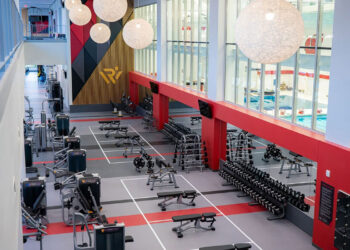
The campus rec center at Binghamton University considered this when they began renovating their facility. Their cardio and strength studios now use the Performance Monster rubber flooring of Ecore Athletic, their four courts are made of hardwood and the elevated track has a Mondo service.
Creighton University took a similar approach when evaluating activity needs across their spaces. At Creighton, they use Mondo Sportflex rubber flooring for their gym courts and weight rooms. They use hardwood in one group fitness studio for their high-intensity classes like HIIT or dance and foam backed vinyl in the other studio which is used for activities like yoga and pilates.
This combination has allowed Creighton to optimize instructor-led programming. High-intensity classes benefit from the responsiveness of hardwood, while the foam-backed vinyl supports quieter, lower-impact formats. This allows for a more tailored experience for students.
Prioritize Safety
In campus rec environments, safety always comes first. Choosing flooring that offers reliable traction and effective shock absorption can significantly reduce the risk of injury.
Across the industry, directors and managers are placing greater emphasis on safety testing and compliance. Modern flooring vendors often provide detailed performance standards that campus rec centers are using for selection and long-term investment.
At Creighton, this holds true. They monitor injury reports in the facility, especially for injuries that take place on the gym courts. They received feedback early on that the floors were slick in the courts, and they worked to remedy the situation by changing things like cleaning schedules and stripping the floor to remove residue build-up when needed. “When we choose a new floor, we rely on safety testing and maintenance reports provided by the vendors,” said Jason Thornton, director of Recreation and Wellness.
This data driven approach highlights how using user feedback and risk management reporting can guide facility decisions. By reviewing minor injury patterns, flooring issues can be solved before they become larger problems, especially in high-use areas or older gym surfaces.
Budget, Maintenance and Lifespan
Hardwood flooring may have a higher upfront cost but can last longer than other synthetic options. Rubber flooring may need less maintenance but can cost more upfront. These are all things to take into consideration when choosing the right flooring for a facility.
The cost of flooring extends beyond purchase price. Staff training on cleaning protocols, compatibility with campus-approved chemicals, equipment needs and the long-term effects of high usage all play a part in total cost of surfaces.
Binghamton recently began a 75,000 square foot expansion that included choosing new flooring for both the existing areas of the facility and the new courts and multipurpose rooms. They chose flooring that did not come with tough to clean crevasses and could be easily cleaned by campus approved cleaning solutions. “We are choosing products that can stand the test of time — meaning those that, with regular monitoring and maintenance, can last until the end of their natural life cycle,” said director of Campus Recreational Services, Thomas St. John .
By thinking about the future of the flooring in their facility, Binghamton has been able to reduce unexpected maintenance challenges. This has become increasingly common as rec centers search for ways to align operational efficiency with user experience.
Aesthetics and Environment
Although not primary drivers of flooring decisions, aesthetics and sustainability are still key factors to evaluate.
Flooring often plays an understated role in shaping the atmosphere of a recreation facility. Color palette, texture and consistency can influence perceptions of cleanliness and energy of a center.
At Creighton, environmental considerations are a major factor in their flooring choices. “For example, if a company uses a high percent of recycled rubber for the flooring, I am more likely to recommend that company,” said Thornton. “It does not override safety, but it is important.”
Sustainability is becoming a key point in renovation projects. Many universities now have a green building or carbon neutrality goals that influence material selection — and recycled rubber, low-VOC adhesives or vendor recycling programs can help facilities align with their institution’s priorities.
In terms of aesthetics, this was something that has been important in the renovation at Binghamton. Before, there were three different types of rubber flooring in their cardio and strength areas. “It was an eyesore,” said St. John. “The Ecore flooring installed has shimmers of white, grey and, of course, Binghamton green.”
The updated aesthetic has helped unify the space and reinforce Binghamton’s brand, contributing to a more modern feel that students and staff appreciate.
Feedback From Members
As always, feedback is the way to improve. By asking students and staff who regularly spend time and walk on the flooring in the facility, the easier it is to fix issues as soon as they arise.
User feedback has become one of the most influential elements in renovation planning. Many rec departments conduct surveys, host focus groups or collect real-time digital feedback about how flooring feels during specific activities. This information often reveals issues that may not be visible to staff or administrators.
At Binghamton, most of the feedback was on the mismatched flooring from before. “Returning students, and faculty and staff alike, have been very pleased with the new consistent flooring in our Fitness Space,” said St. John. “We have shared with them that they can expect more of the same in the expansion.”
Looking Ahead
Thoughtful flooring choices can transform a rec center’s function and feel. By focusing on activity needs, safety, maintenance and user experience, facilities can create spaces that not only durable and efficient but also welcoming place where students and staff want to be. The right floor doesn’t just support activity – it strengthens the entire student experience.