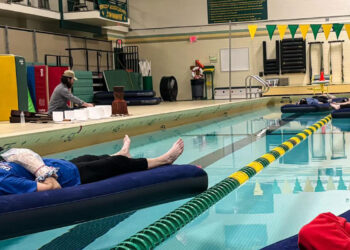



From massage chairs to meditation zones, campus recreation departments across the country are creating recovery spaces that help students, faculty and staff recharge, reduce stress and sustain long-term wellness.
Recovery is no longer an afterthought in campus recreation. Across the country, departments are carving out dedicated campus recreation recovery spaces where students, faculty and staff can restore their minds and bodies. While the equipment varies — from massage chairs to space for yoga and Pilates — the goal stays the same: making recovery as central to wellness as cardio or strength training.
At the University of Illinois Urbana-Champaign (UIUC), the shift became more of a priority after the COVID-19 pandemic. The recreation department took an instructional kitchen and transformed it into the Recovery and Reflection Room. The amenities include zero-gravity chairs, compression boots, massage guns, yoga mats, prayer blankets and even a kinetic art coffee table.
Justin Peterson, the executive director of Campus Recreation, said the purpose goes beyond simply providing the tools. His department’s goals are directly tied to accessibility.
“People of all fitness levels need ways to recover that fit their needs,” said Peterson. “Our programs are designed to offer avenues for recovery for our patrons, whatever it may look like to them.”
To make the most of the space, UIUC added wall-mounted equipment, dimmable lighting and calming design elements, creating an environment to feel both functional and restorative.
The same intentionality is central at Rice University (Rice). “Recovery means supporting the body and mind’s ability to adapt, repair and restore,” said Anatolia Vick-Kregel, the senior health and well-being director for Rice Recreation. “We see it as the bridge between exertion and sustainable performance in life.”
At Rice’s Recreation and Wellness Center, campus recreation recovery spaces are multifaceted. They include chair massages, mobility clinics, stretching packages with practitioners and dedicated areas for Pilates, yoga and meditation. All are purposefully separated from the high-energy training zones and feature calming colors and soft lighting. The department also incorporates classes such as “The Art of Relaxation,” teaching stress-relief techniques students can use long after leaving the facility.
The University of Pennsylvania (UPenn) has taken a similar approach, blending recovery tools with guided programming. Its Rest and Recover classes are led by certified personal trainers and walk students through foam rolling, compression therapy and massage chair sessions. The classes are so popular they fill up each offering. The department plans to expand this fall to meet demand.
For Morgen Rizzo, the assistant director of fitness and well-being, these spaces and programs also support inclusivity — a key value for UPenn Campus Recreation. She noted how both students and staff face high-pressure environments, often without time to rest. The recovery room was created to meet that need. Staff and students can book 45-minute slots to use the room. It offers massage chairs and guns, compression boots, mats, foam rollers, eye masks and dimmed lighting. Each amenity is meant to foster both physical and mental rejuvenation.
The impact of these campus recreation recovery spaces is apparent across each department — from UPenn’s class success to overwhelmingly positive feedback at UIUC and Rice.
Vick-Kregel shared how faculty have praised Rice University’s commitment to well-being. She also said students describe the space as a much-needed “reset button.”
As recovery becomes a stronger expectation in campus recreation, each professional gave advice for other leaders looking to add campus recreation recovery spaces.
Peterson emphasized the importance of student input and talking to patrons. “Ask them what they want from a recovery room and incorporate their feedback into the design,” he said.
Vick-Kregel recommended starting small and staying evidence-based. She said invest in a few modalities at first rather than trying to do everything all at once. She also emphasized the importance of the atmosphere, “A well-designed, calming space is as important as the equipment itself.”
Each department and perspective reflect the growth of recovery — it’s no longer a luxury but a necessity for campus rec. As campus recreation recovery spaces continue to evolve, these universities are ready to evolve with it. For students, faculty and staff balancing busy schedules, recovery spaces can provide more than a moment of rest. They’re shaping the future of campus rec by helping college communities reduce stress and sustain long-term well-being.