

For campus recreation leaders, intentional professional development can strengthen staff engagement, build future leaders and bring new ideas back to campus.
Sending a staff member to a conference or workshop costs both money and time — two things campus recreation departments rarely have to spare. But for those who invest in professional development, the benefits can extend far beyond the event itself.
Staff can gain a deeper understanding of the industry, build professional connections and return to campus with renewed energy for their work.
So, when budgets are tight and schedules are packed, are these opportunities worth it?
For Eric Vaughn, the associate director of Campus Recreation at Missouri State University (MSU), they are — especially when approached with intentionality. Rather than sending staff to conferences simply because opportunities are available, Vaughn’s team aligns attendance with both departmental priorities and individual staff goals.
“As higher education continues to face challenges related to recruitment, retention and employee development, professional conferences will remain a critical tool for helping staff grow, stay engaged and bring innovative ideas back to campus,” explained Vaughn.
MSU send staff to several campus rec professional development conferences throughout the year, including the NIRSA Region IV Conference, the NIRSA Annual Conference, the Athletic Business Conference and the American Camp Association (ACA) National Conference.
But deciding which conference is the right fit for each employee requires careful consideration.
One example is how directors at MSU decide whether a staff member would benefit more from the NIRSA Region IV Conference and the NIRSA Annual Conference. Vaughn said the team considers both the needs of the employee and the needs of the department.
“A newer full-time professional who’s still learning may benefit greatly from the regional conference and its networking opportunities,” said Vaughn. “A more experienced manager may gain greater value from the national conference by engaging with some of the leading professionals and emerging practices in the field.”



The team also considers how an employee’s current responsibilities align with a particular conference.
For example, MSU is sending Caroline Wieters, the assistant director of RecSports and Youth Programs, to the 2026 ACA National Conference — a staff member working closely with Camp Claw, MSU’s summer program for children ages 6 to 11.
“As we enter year five of Camp Claw, participation has grown significantly over the past two years,” said Vaughn. “Wieters has been instrumental in that success, and we believe it’s important to reinvest in her development.”
The University of Texas at Dallas approaches professional development with a similar philosophy of intentionality.
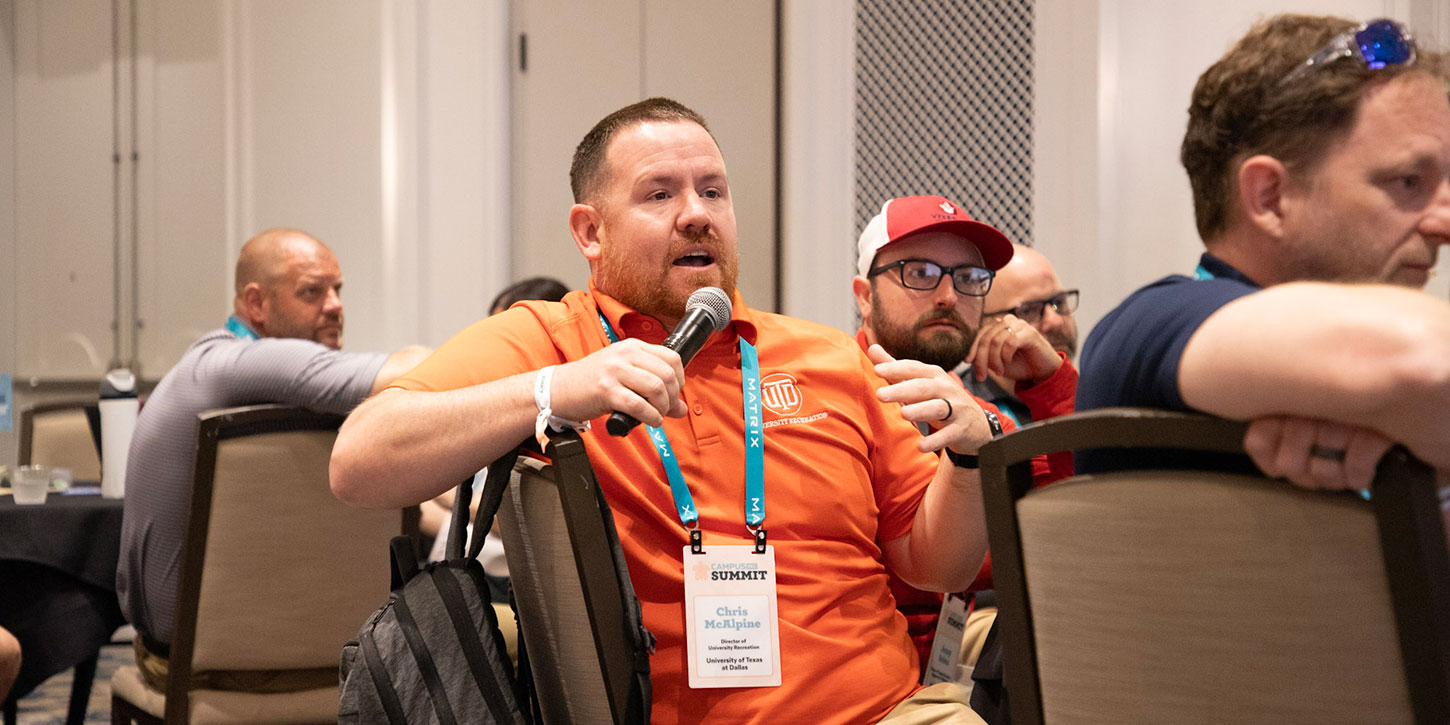
Chris McAlpine, the director of University Recreation at UT Dallas, said his team considers an employee’s role and career aspirations in the field when deciding which opportunities to pursue.
The department prioritizes learning experiences that allow staff to make deeper connections and engage with content relevant to their careers over large conferences.
This approach shaped Alejandro Herrera’s experience at the 2026 Aspiring Director’s Summit.
Herrera, the associate director of Facility Operations at UT Dallas, said the biggest benefit of the experience wasn’t necessarily returning to campus with a specific idea to implement. Instead, it was gaining a deeper understanding of what it means to lead as a director.
“The Aspiring Director’s Summit challenged me to think beyond the day-to-day responsibilities of facility operations and consider areas like strategic planning, campus partnership, staff development and leading through influence,” said Herrera. “Hearing how professionals from other institutions approach similar challenges also gave me ideas and confidence that I can apply over time rather than trying to recreate exactly what another campus is doing.”
Herrera’s experience highlights an important aspect of professional development. The value isn’t always in bringing one idea back to campus. Sometimes, it’s in giving employees the perspective and confidence to grow into their next role.
That perspective is shared by Vaughn, who believes professional development should be viewed as an investment — particularly when budgets make travel and attendance difficult.
“It’s important to recognize that these events aren’t simply a travel opportunity or a line item in a budget,” explained Vaughn. “They’re strategic investments in people. Staff return with new ideas, fresh perspectives, expanded networks and renewed energy for their work. In many cases, those experiences reignite their passion for the profession and strengthen their commitment to the institution.”
To make those investments possible, Vaughn said his team tries to maximize its budget by planning conference attendance one to two years in advance. This approach allows the team to be intentional about which conference will contribute meaningfully to both staff growth and the overall success of the department.
One area Vaughn said he’s seen the greatest impact is in the growth of graduate assistants and student employees. Each student staff member has a development plan created by department leaders, which includes networking opportunities, leadership experiences and professional conference attendance.
Over the last eight years, Vaughn has worked with around 20 student employees through the professional development plan. Of those students, 13 became professionals in the field through graduate assistantships or full-time positions — a 65% conversion rate of student employees to emerging campus rec professionals.
“When I speak with those former students about what influenced their decision, the answer is remarkably consistent,” said Vaughn. “They point to the professional development opportunities, networking experiences and exposure to passionate professionals that sparked their interest and reinforced their desire to pursue a career in campus recreation.”
The experience suggests that professional development can have an impact well beyond an employee’s current position. When departments expose student employees and emerging professionals to the broader camps rec industry, they can help staff envision a future career within it.
Many directors and senior leaders look for tangible outcomes from professional development. But the experiences at MSU and UT Dallas show that the return on investment often goes beyond a specific skill, idea or initiative.
For directors wondering whether the investment is worth it, Vaughn’s advice is to experience it firsthand.
“I think senior leaders who have never attended a NIRSA event should be encouraged to go,” said Vaughn. “Not only would they see the amount of education, discussion and learning that takes place, but they would also gain a better understanding of the impact these experiences have on staff members they supervise and support.”
For the staff members themselves, Herrera said the impact comes down to the ability to step away from day-to-day responsibility and gain a new perspective.
“Professional development events create opportunities to learn from experienced leaders, ask questions and return with renewed motivation and confidence,” explained Herrera. “Not all benefits can be measured right away. Sometimes the greatest approach is helping staff develop the mindset, perspective and relationships they’ll rely on throughout their careers.”
For campus rec leaders, that may be the most important benefit of all — developing employees who are better equipped to lead today while preparing them to become leaders tomorrow.
Interested in professional development opportunities for directors? Join the waitlist for the 2027 Campus Rec Leadership Summit now. Email gracie@peakemedia.com to learn more.