


How Yale Campus Recreation is moving forward while keeping one foot firmly planted in traditions.
In 1701, the Connecticut legislature adopted a charter to erect a collegiate school. Seventeen years later, it was named Yale College.
Fast-forward to today, with Yale University standing firm, 300-plus years of tradition bolstering it up.
Such rich history is found everywhere on campus, including architecture. In fact, the Payne Whitney Gymnasium (PWG) — the main hub for Campus Recreation and Varsity Athletics — was built in 1932 to resemble a grand church. “It’s a historic athletic and recreational landmark that spans over 12.5 acres and rises 14 stories high,” explained Ryan Hagen, the associate Athletic director, Campus Recreation.
The PWG serves both varsity and recreational activities. It consists of six multipurpose courts, two pools, two fitness and dance studios, a gymnastics training center, a fencing salon, a recreation and community fitness center, a varsity strength and conditioning center, a varsity basketball/volleyball competition court, a trophy room where Yale’s athletic history is on display, and so much more.

In addition, the PWG is operated and cared for by Campus Recreation, Athletics Facilities Operations and the University Central Facilities team. However, it’s only been in the last four years that all recreational, intramural, club sports and fitness program areas have been branded and operated as one central department.
Hagen oversaw this change after COVID, guiding the rebrand and telling the new story across campus. “The journey has been a learning experience for everyone,” he said. “Team members with deep Yale history had to step back and connect their expertise to the bigger mission of a central department. Those new to Yale, me included, had to learn and embrace what makes this place so unique.”
A Different Way to do Intramurals
One of those unique aspects Hagen alluded to is that of the Undergraduate Intramural program at Yale.
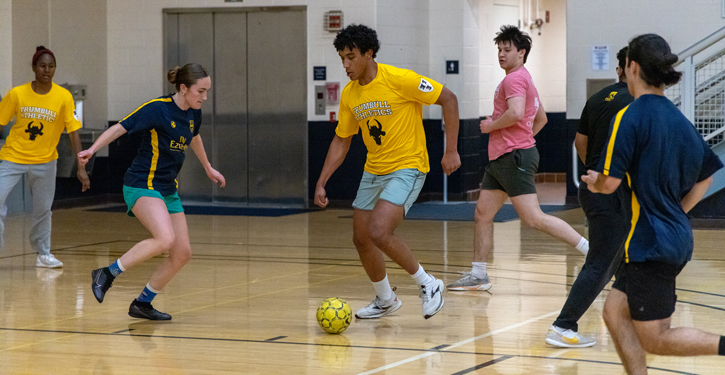
It’s built around the 14 residential colleges at the university, where undergraduate students are assigned to and stay in throughout their time at Yale. “Intramurals are played exclusively within this system, as students may only compete within their college team,” said Hagen.
Every year, the Tyng Cup is up for grabs. It’s awarded to the college with the highest total points. The program is provided guidance and staff support by Campus Recreation, but it’s mostly led by intramural secretaries from each residential college, overseen by the head intramural secretary, currently Natalie Haase.
“The residential college system is a huge asset,” said Haase. “It automatically provides community-based teams, which means students don’t need to know people or build their own roster to participate. They just show up, and the teams are ready. That structure lowers the barrier to entry and makes it easy to try new sports.”
Haase initially got involved in the program through her own residential college, eventually applying for the head secretary position. She’s in charge of scheduling and helping the intramural secretaries fill their teams. In addition, Haase acts as the voice of the students and pays close attention to what they want.
During her time as head secretary, Haase has learned several keys to success in running the program:
- Build personal relationships with the secretaries of each college, as they are the heart of the program.
- Find the balance between fun and competition.
- Look for patterns over time versus making a change based on one piece of feedback.
- Communicate clearly and in a streamlined manner to keep things running smoothly.
All in all, Haase only had positive things to say about the Undergrad Intramurals and her role. “It’s been one of the most formative leadership experiences I’ve had at Yale,” she shared. “Working with Tom Migdalski and Ryan Hagen has been an honor and a privilege. I’m so grateful to have them in my corner.”
OEC: A Passed-down Legacy
Another unique aspect of Yale’s Campus Recreation department starts with Tom Migdalski — or rather, his father Edward.
Known as a central figure in outdoor recreation and club sports, Edward was also a world explorer and taxidermist for Yale’s Peabody Museum, and a Yale Medal recipient. In 1966, Edward was granted a two-year trial to transform the Yale Engineering Camp base into a recreation facility for the Yale Community. It was renamed the Yale Outdoor Education Center (OEC) and was a huge success.
Edward directed the center from 1966 until 1984. During that time, Tom found himself raking the beach at the OEC as a boy, and then lifeguarding there in high school and college. He spent six years as the assistant director and was hired full-time in 1984. “I took over my father’s role, continuing his legacy of outdoor education and campus recreation at Yale,” he shared. Tom’s been there ever since.
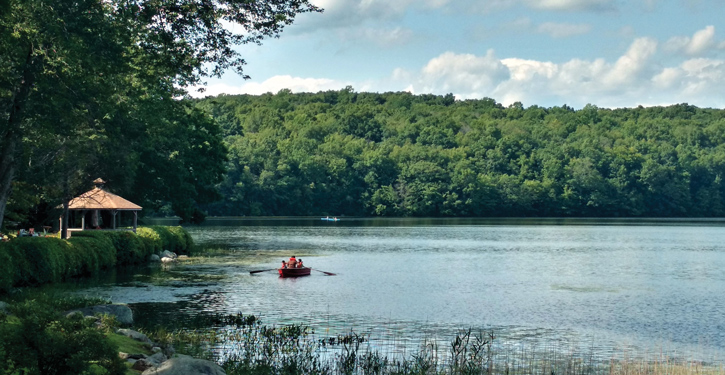
As a seasonal, lakefront retreat, the OEC is just 45 minutes from New Haven. With 1,500 wooded acres around a pristine mile-long lake, it offers picnic areas, swimming, hiking, paddle craft and more from June through Labor Day. The Yale community can use the OEC via membership, day-use passes or even group rentals. On a busy summer weekend day, they can see 200-300 patrons. “The OEC provides a unique outdoors opportunity to the Yale community by rounding out the wide variety of offerings on the Yale campus in the city,” said Tom.
But this isn’t the only legacy of his father’s that Tom has been part of. Edward also started the Yale’s Club Sports Program. “The Athletic Department back then recognized only seven ‘minor sports’ — fishing, pony polo, riflery, rugby, sailing, skiing and trapshooting,” shared Tom. “Dad’s first accomplishment was to officially change the program name from Minor Sports to Club Sports because he believed ‘there’s no such thing as a minor sport’ for those passionate about their activity.”
Edward grew the program from seven to 18 clubs. Since Tom took over, he has seen that number expand to 49 clubs. It’s a thriving program rooted in history, mission and traditions.
“Every team brings a unique spirit to campus, and together they create a vibrant community of student participants,” said Hagen.
Innovation Amidst Tradition
While tradition strengthens Yale through and through, Hagen noted it also lends to navigating layers when any change is proposed.
However, Hagen applauded the Campus Recreation team which has undergone much change over the last few years. “I really thank them all the time on this,” he said. “Everything we’re going to do here is not for what any one person thinks is best. It’s for what Yale Campus Rec should be for the students and our community at large.”
Hagen shared he sees change as not optional but essential. He knows himself as a leader and Yale Campus Recreation must continue to adapt, pivot and overcome.
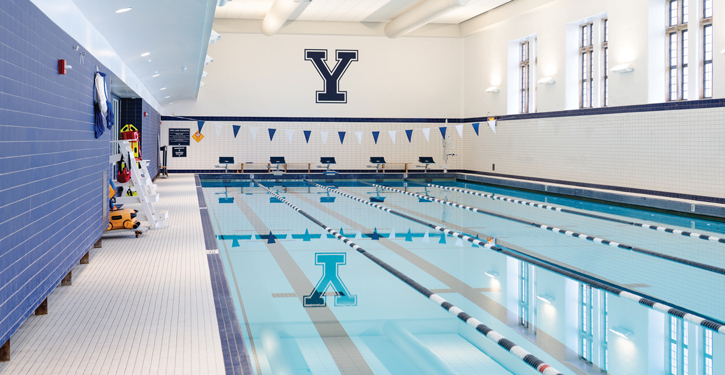
With that said, one of the key lessons that stands out to Hagen in this blending of new and old, of growth and tradition, is not taking anything for granted. Both long-standing institutional knowledge and the daily rhythms of the programs being run at the PWG, OEC and beyond play a role in Campus Recreation at Yale.
“Every day brings new challenges, from facility projects to varsity operations to the needs of both new and returning participants,” said Hagen. “What keeps us steady is our team’s ability to adapt, learn and keep working toward a shared purpose.”
The power of Yale and its Campus Recreation team is moving forward into the future. But, it’s doing so while keeping one foot firmly planted in its rich history and lasting traditions.