

Professionals from three institutions share how they launched campus rec esports programs, overcame early obstacles and created sustainable gaming spaces for students.
When the National Association of Collegiate Esports (NACE) was founded in 2016, there were seven varsity teams affiliated with the organization. Ten years later there are over 280 teams — a testament to how rapidly esports have grown over the past decade.
This growth is evident across the country, where campus rec esports programs and gaming centers are being added frequently and even growing beyond their original visions.
But momentum alone doesn’t build a program. Many teams are navigating early challenges such as staffing, space, funding and figuring out what sustainable campus rec esports offerings actually look like in practice.
Below, campus rec professionals from Harper College (Harper), Slippery Rock University (SRU) and the Georgia Institute of Technology (Georgia Tech) share an overview of their programs, how they’ve navigated obstacles and what they’d tell other teams about starting an esports program.
An Inside Look into Campus Rec Esports Programming
Esports is relatively new within Campus Recreation at Georgia Tech. Brian Smith, the senior director of Campus Recreation at Georgia Tech, said esports had very little interaction with the department before two years ago. Now, the department offers esports as intramural and club sports.
Georgia Tech joined the Voice of Intercollegiate Esports (VOICE), a nonprofit organization working to standardize esports policies within collegiate programming, about a year ago.
“It’s a coalition of several different universities across the country,” said Smith. “By aligning with VOICE and USA Esports, we’re professionalizing the experience and ensuring our competitive standards match those of Georgia Tech.”
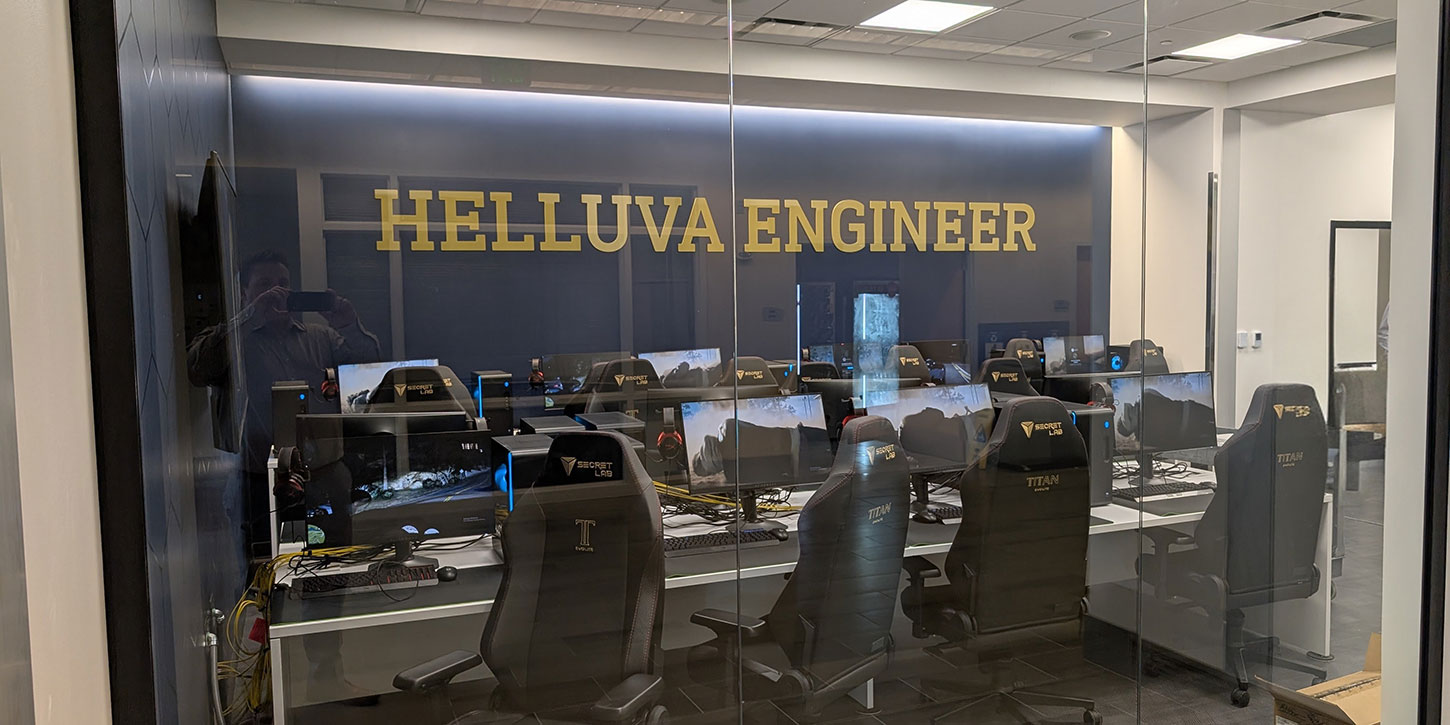
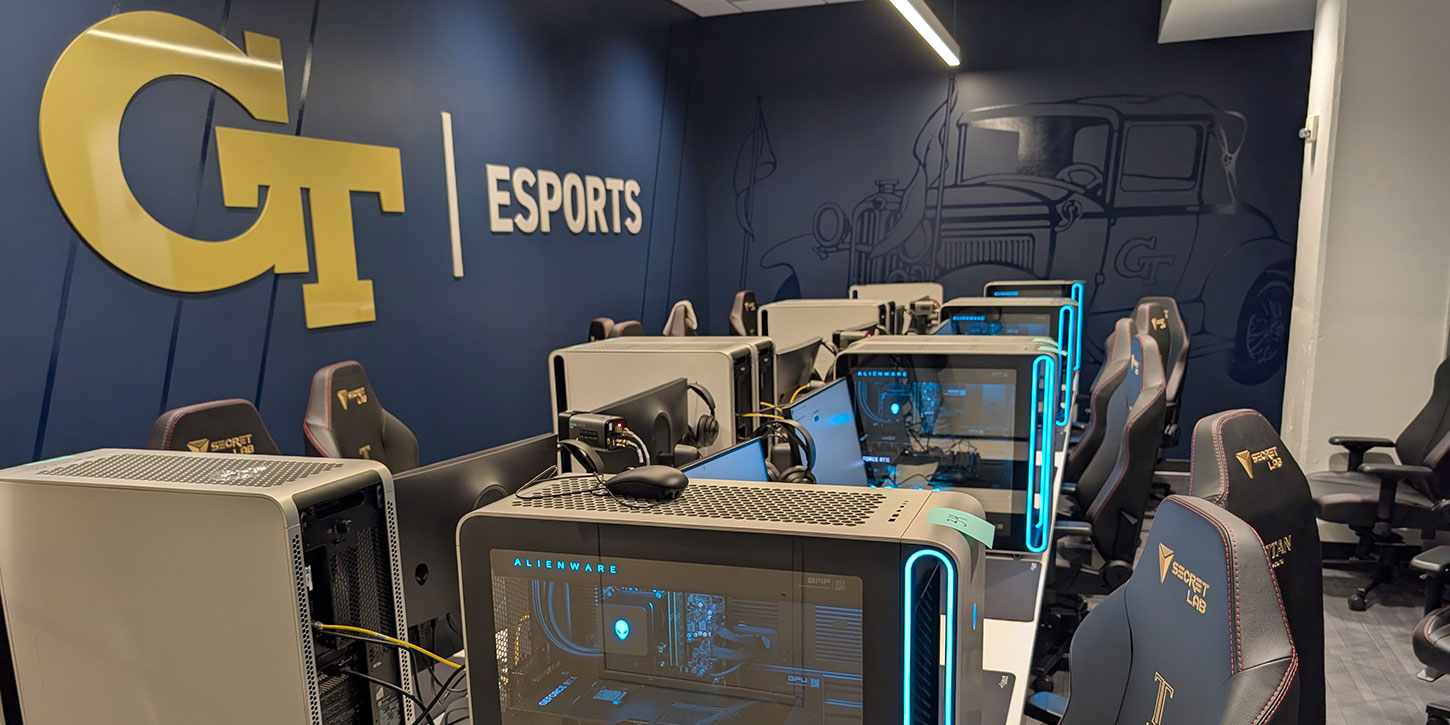
The Esports and Gaming Center at Georgia Tech supports both recreational and competitive gaming, with features including an open play area with 22 PCs, a dedicated broadcast and streaming room, a competitive practice arena, and console gaming stations equipped with Nintendo Switch, PlayStation and Xbox.
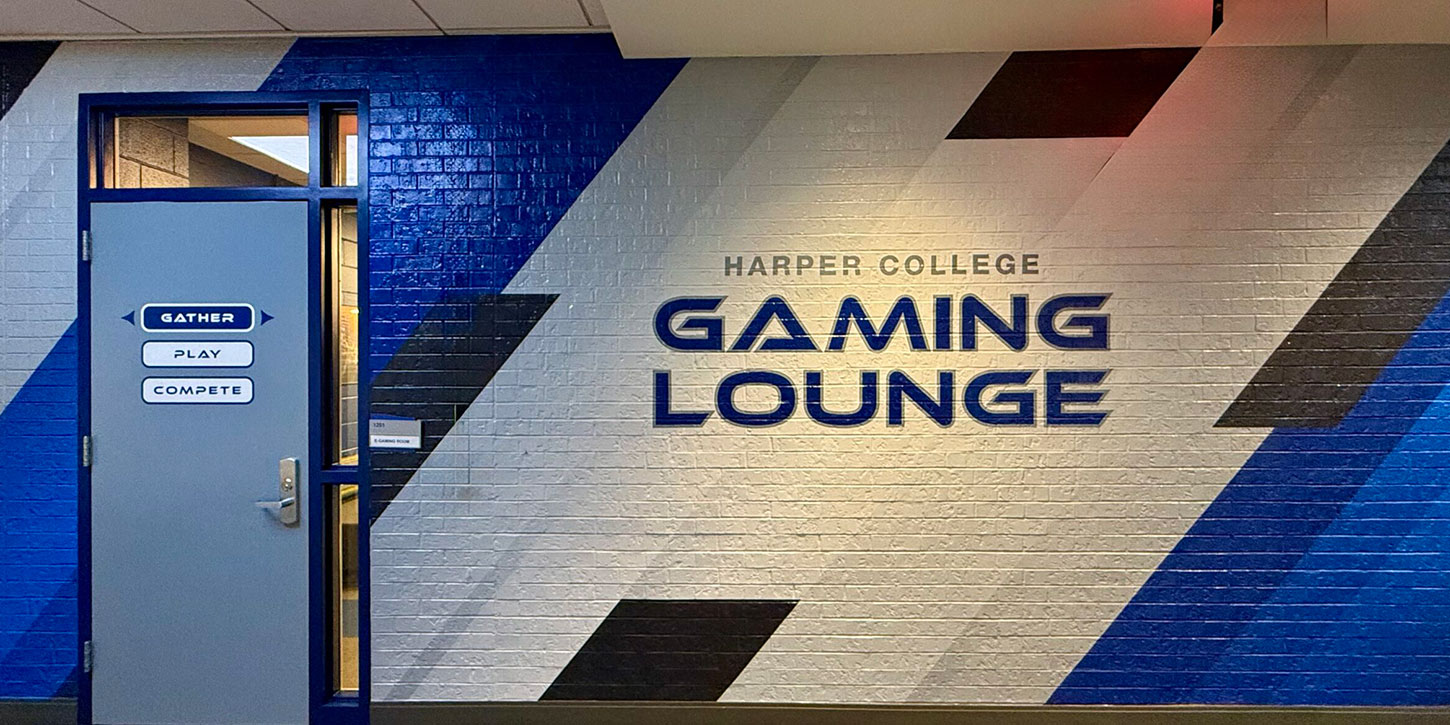
Around two years ago, Harper Campus Recreation rebranded its Gaming Lounge to create a welcoming environment to promote engagement and meet the growing role of esports and gaming. The update focused on catering to both competitive and casual gamers, along with visual branding.
Veronica Tantoco, the senior assistant director of Facilities and Operations for CENTERS at Harper, said the Gaming Lounge has grown beyond the team’s initial vision, with more development still in the works. “It’s brought students, faculty and staff to the Rec Center, created a central gathering space for students and on-campus opportunities, and provided access to equipment for students who otherwise may not have it,” she said.
The Gaming Lounge at Harper includes console gaming with Xbox, PlayStation and Nintendo Switch, 10 gaming PCs, four 70-inch TVs, air hockey, foosball, board games and cards. Lounge seating and tabletop games allow for students to still have a place on campus to study or socialize even if the Gaming Lounge isn’t open.
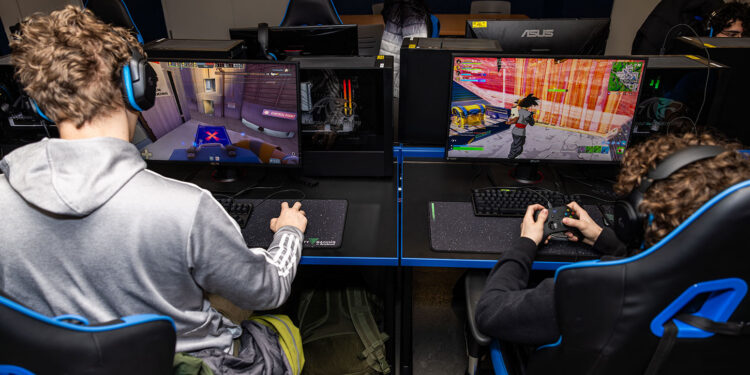
Esports at SRU have had a similar journey to Harper. “Esports have evolved from what was initially viewed as a niche offering into a core program area within campus recreation,” said Matthew Lobaugh, the assistant director of Recreational Sports at SRU. “It’s exceeded initial expectations in terms of student engagement.”
While there was uncertainty early on around whether esports would be more of a casual, drop-in activity or a highly competitive club at SRU, Lobaugh explained how it’s successfully become both. Within the esports program, the department offers open recreation opportunities, structured intramural leagues and competitive club teams.
The esports lounge at SRU includes 13 gaming stations equipped with live camera capabilities, three large display TVs, and console gaming setups with Xbox, PlayStation and Nintendo Switch.
Trends and Challenges
As programs like those at Harper, SRU and Georgia Tech continue to grow, broader trends are emerging across the campus rec landscape, along with the challenges that come with integrating something new and evolving.
One of the clearest trends is the push toward more inclusive programming. While collegiate esports early on focused on competitive, varsity-style play, many campus rec departments are designing their spaces for a wide range of participants.
“Mobile and tabletop gaming are making a comeback,” said Tantoco. “Mobile gaming is more accessible, as a larger number of people have access to a smartphone or tablet and Wi-Fi, especially on a college campus.”
Casual drop-in gaming, recreational leagues and social events paired with competitive offerings allow programs to serve a more diverse population, including students who may never have considered visiting the center otherwise.

Equity and access have also become central inclusion considerations for many teams. Campus gaming centers can provide open access to expensive gaming equipment, allowing students from all financial backgrounds to participate without needing their own hardware.
Another common trend among these institutions is the integration of content creation and streaming. Lobaugh noted how students are increasingly interested in not just playing but broadcasting, producing and engaging with esports media.
However, more tech integrations come with their own set of challenges. Lobaugh said one of their most common obstacles is underestimating the complexity of implementing the program and tech itself.
“Establishing a functional esports space requires significant coordination with campus IT, including network configuration, security protocols, software management and ongoing maintenance,” said Lobaugh.
Spacing presents another challenge for many departments. Gaming environments require reliable high-speed networking, sufficient power capacity, sound management and flexible layouts able to shift between casual use and competitive events.
For Georgia Tech, the biggest challenge was finding the right location. When a cafe in the Campus Recreation Center closed, the team decided it would be an ideal place for the Esports Center. “Given the location of the space, it was going to be highly visible and create a great opportunity for students,” explained Smith. “Once that was accomplished, it was mostly about staying within budget.”
Harper had a similar obstacle. Tantoco explained how the process of finding the space for an esports center is similar to what teams had to do amid the COVID-19 pandemic.
“I think back to COVID-19 closures when we had to reimagine and repurpose areas to create more activity spaces,” said Tantoco. “Creating a dedicated esports space is similar. Are you going to retrofit an existing space or do you have the ability to build a new one?”
Advice on Building a Campus Rec Esports Program
Smith, Lobaugh and Tantoco offered key pieces of advice for building programs, fostering engagement and navigating challenges.
Overall, the leaders recommended having a clear vision for the program and where it fits within the overall department. Ask whether the focus will be recreational, competitive or hybrid, and gain an understanding of what students want out of esports and gaming opportunities.
“I believe what’s made us successful in our endeavors thus far is getting input from the main users of the space, learning how other collegiate programs operate and adapting items to what’s the best fit for us,” explained Tantoco.
Next, Smith highlighted the importance of building a program for longevity from the start. “The most important piece is developing a sustainable model that can easily be repeated and create strong foundations in the future,” he said.
Tantoco agreed that sustainable programs are vital, especially when it comes to funding. While initial costs may be shocking, she stressed how it won’t be an annual expense as the program grows and the focus shifts to finding sustainable ways to fund operations.
Finally, establishing long-term support from the start is vital. Lobaugh recommends involving IT from the very beginning of building out an esports program. “Their role is critical, and delays in networking, security or system setup can significantly impact timelines,” he said.
For Harper, Tantoco stressed having strong asset management and repair and replacement plans for the long-term sustainability of the space.
“PCs and consoles are improving, and new technology is coming out constantly,” said Tantoco. “So, when you think about repairs and replacement, it’s about prioritizing what’s necessary to effectively support your program.”
Overall, the experiences at Harper, SRU and Georgia Tech reflect a broader reality that campus rec esports are a program area worth investing in. What began as a niche offering within many departments has grown into a pillar of campus recreation, drawing in students who otherwise aren’t engaged with traditional recreation programming.
The path to building a thriving program isn’t without challenges, but the foundation is becoming clearer: start with student input, plan for sustainability and design spaces that can serve everyone from a casual gamer to a competitive player.