

What started as a handful of student-led clubs has grown into a competitive, professionally supported program that reflects WCU’s identity and offers a different approach to collegiate recreation.
The mountains surrounding Western Colorado University’s (WCU) campus are a big reason many students choose to attend the university. Recognizing that connection, WCU developed its Mountain Sports program, allowing students to pursue their interests in outdoor sports while being part of a competitive team.
What started as a few student-led clubs has grown into a collection of professionally supported teams with university resources behind them.
Today, the program serves more than 140 student-athletes annually, with opportunities to compete in sports ranging from freeride skiing to trail running and mountain biking. Although the teams operate outside the NCAA, they’ve built a competitive presence extending well beyond campus.
Mountain Sports has become an important part of WCU’s identity and its approach to student engagement and retention.
From Student Clubs to Competitive Teams
The roots of Mountain Sports date back to 2008, when WCU discontinued its NCAA ski teams. In the following years, students continued to find ways to participate in the sports they loved, organizing informal clubs and creating opportunities to compete.
The freeride ski club took the first steps toward a more organized structure, approaching the student government for funding. With that support, the group could become eligible to use university vehicles for trips and competitions. That effort helped set things in motion.
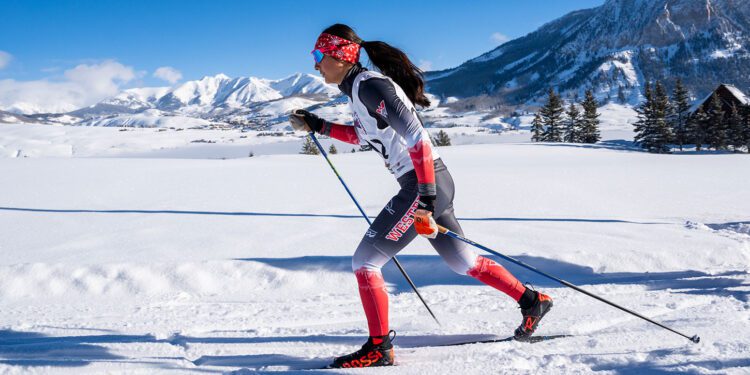
By 2014, several groups, including freeride skiing, trail running, Nordic skiing and alpine skiing, had come together under the Mountain Sports name. What had started as individual student interests was beginning to take shape as a larger program.
Private funding supported the program as it grew, but when some of those resources dried around 2017, WCU stepped in to help fill the gap.
“That’s when the university looked at everything that had been built and was like, ‘Wow, this is actually quite valuable to us,’” said Kieran Nay, the assistant director of Campus Recreation and Mountain Sports at WCU. “They backfilled what we were losing from those funding sources and the modern iteration of Mountain Sports was born.”
Today, Mountain Sports operates somewhat like a collection of collegiate varsity programs, with professional coaches and administrative support. However, the teams compete outside the NCAA and follow different competitive structures depending on their respective sports.
Nay said that flexibility has been important to the program’s development. Some teams compete through established collegiate organizations, while others travel independently to competitions across the country and internationally.
Finding Community and Connection
While competition is a major part of Mountain Sports, it isn’t the only reason students get involved. For many, the opportunity to attend a university surrounded by the Rocky Mountains is part of the appeal. Mountain Sports gives them a way to stay connected to the activities and lifestyle that helped draw them to WCU.
“You have to lean into your identity and what makes you unique,” explained Nay. “If you’re a smaller institution up at 8,000 feet in the Rocky Mountains, that’s a pretty unique piece of our identity, and it’s something we’ve done really well.”
The program also offers something that can be difficult to find in traditional collegiate athletics: opportunities for students with different experience levels and competitive goals to participate on the same team.
Mountain Sports doesn’t impose roster caps, meaning students don’t have to arrive with an extensive competitive background to get involved. On the trail running team, for example, some athletes have trained for national championships while others have joined with the goal of completing their first half-marathon.
That range is an important part of the team environment.
Nay, who attended WCU and competed on its NCAA cross country team before joining Mountain Sports, experienced that difference firsthand. After leaving the NCAA program, he joined the ski mountaineering and trail running teams, finding another way to combine collegiate competition with his interest in outdoor sports.
For him, the sense of community stood out.
“There was a lot of passion, and I was around a lot of people who were really passionate about being on these small, non-traditional teams,” said Nay. “On the student side, one of the biggest things we have is the sense of community that gets built out of these teams.”
Students can pursue high-level competitive goals while still being part of a team that welcomes people at different stages of their athletic journeys. That balance has helped the program develop athletes who continue to compete at the highest levels of their sports while maintaining an environment where students can participate for the experience and camaraderie.
Several professional trail runners have come through Mountain Sports, along with athletes who have competed internationally. The program has also sent students to competitions in Canada and Europe, as well as the World University Games in China.
Those opportunities are supported by professional coaches, university vehicles and the resources needed to travel for competitions. Compared with student clubs that often rely on fundraising, carpools and independently arranged lodging, Mountain Sports provides a more structured competitive experience.
Supporting the Program Behind the Scenes
Managing multiple teams that train, travel and compete throughout the year requires considerable coordination. While the student-athlete experience is what people see, there’s a significant amount of work happening behind the scenes to keep the program running.
Although Mountain Sports is housed within Campus Recreation, its day-to-day operations look quite different from those of a traditional recreation program. The administrative team is responsible for supporting coaches and handling the operational details that allow each team to focus on training and competition.
Transportation is one example. Mountain Sports maintains its own fleet of university vehicles, separate from the general university vehicle pool. With several teams traveling on different schedules, coordinating availability and making sure everyone has the transportation they need takes careful planning.
There’s also the financial and administrative side of managing the program. Mountain Sports receives funding through WCU’s optional campus recreation fee, student dues and outside support. The department oversees those resources while managing team budgets, hiring, purchasing, travel arrangements and other operational responsibilities.
Nay said most of the program’s coaches are part-time, benefited university employees who balance their coaching responsibilities with other professional commitments. Much of the administrative team’s work involves providing the support coaches need to keep their teams operating.
That work also extends beyond day-to-day logistics. Mountain Sports serves two purposes: providing competitive opportunities for student-athletes while contributing to the university’s recruitment and retention efforts.
To communicate that impact, the department tracks student outcomes and uses retention data to demonstrate the program’s value to university leadership. According to Nay, Mountain Sports participants have higher first-year retention rates than the university average.
Having that information gives the department a way to show that the program’s impact extends beyond competition and helps make the case for continued institutional support.
Looking Ahead
After more than a decade of growth, Mountain Sports is entering another stage of development.
One of the next steps is a move into a new, standalone facility. Until now, the program has relied on shared and borrowed spaces. A dedicated location will give teams a place to gather while providing additional space to support operations and build a stronger program identity.
Other universities have already taken notice of what Western has built, with some reaching out to learn more about the program’s structure and how they might develop similar offerings.
For campus rec leaders considering opportunities outside traditional programming models, Nay said the first step is understanding what students want and where their interests lie.
From there, it takes people willing to put in the work to turn those interests into something sustainable. Mountain Sports didn’t start with a fully developed plan or a large institutional investment. It grew because students saw an opportunity to pursue something they cared about, and university leaders eventually recognized the value in supporting it.
For WCU, that meant building on the outdoor recreation opportunities already woven into the campus experience. Other institutions may have different resources, interests or traditions to draw from, but the approach remains relevant: identify what makes the campus unique, listen to students and find ways to turn that interest into lasting opportunities.