


How campus rec teams across the U.S. are meeting rising student interest in pickleball by using multipurpose space, renovating underutilized areas and adding outdoor courts.
Pickleball has been the fastest-growing sport in the U.S. for the fourth year in a row, according to the Sports and Fitness Industry Association (SFIA) and campus communities play a major role.
In 2023, SFIA reports showed players ages 25-34 accounted for 16.7% of participants across the U.S., and players ages 18-24 accounted for 13.3%. Plus, the average player age continues to drop each year, moving from 38 in 2021 to 35 in 2023.
The sport’s consistent growth provides an opportunity for campus rec leaders to meet rising student interest by adding space to play. Whether an indoor court or an outdoor facility, these high-impact areas are helping teams drive engagement and foster social connection.
What’s Driving Additions
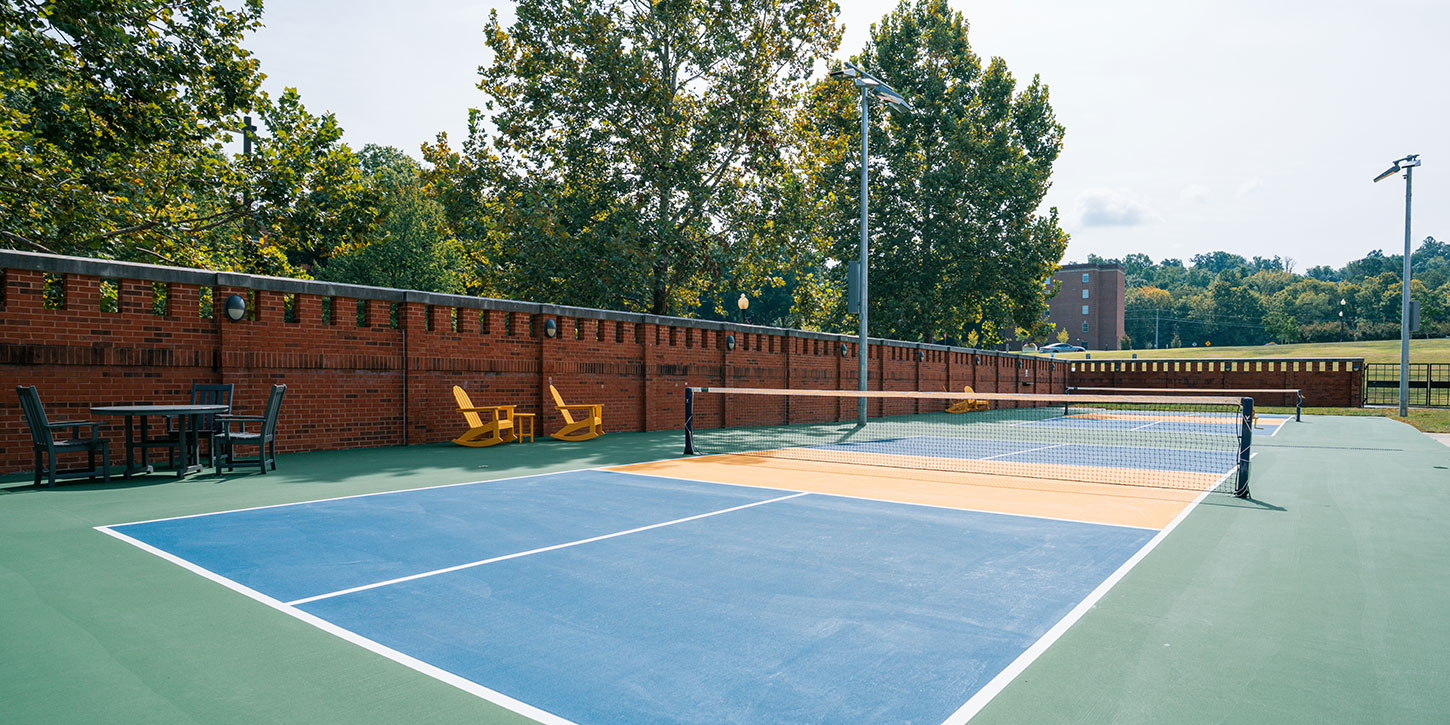
At East Tennessee State University (ETSU), student interest in pickleball surged after the COVID-19 pandemic. According to Kari Albarado, the director of Campus Recreation, the result was a temporary indoor space created by taping lines on the multipurpose court. This led to a broader conversation about creating a dedicated outdoor pickleball space with students leading the charge.
“Pickleball at ETSU was really a student-led initiative,” said Albarado. “Our student government association (SGA) really got behind this idea of creating outdoor pickleball at ETSU, and it was something they worked alongside us in our department to make it happen.”

Student demand also drove the addition of courts at the University of Iowa. When asked what they want to see in campus rec facilities, JT Timmons, the director of Recreational Services, said students, staff and faculty always said pickleball.
With badminton courts already in place, the team just had to adjust the nets and set aside time to reserve the courts for pickleball. The next step was adding an outdoor facility to meet the sport’s popularity on campus.
Megan Feasel, the director of Campus Recreation at Georgia Southern University (GSU) Armstrong, said their team saw an opportunity to use a renovation to change the layout and meet the community’s growing interest in pickleball.
For GSU Armstrong, the need to resurface the tennis complex and the lack of student use led to a redesign of the space. During the remodel, they were able to change the layout to accommodate six pickleball courts and nine tennis courts.
“There are so many facilities within Savannah that redid tennis courts to add pickleball, and you can’t even get on them,” said Feasel. “We knew what was happening in our own city, so then to enhance it to our campus community was a highlight for us.”
While the demand is there for campus rec pickleball courts, departments have to make it happen.
Making Renovations Happen
The ETSU team added two outdoor courts through the Facility Improvement Fund, a student-fee-supported reserve. Departments across campus can submit proposals to pull from the fund to a committee including both administrators and students to have campus projects funded.
When trying to figure out where the space should go, Albarado said she and her team saw an opportunity to turn an unused courtyard into pickleball courts.
“We had to think about how we could use an underutilized existing space without a defined purpose and make something on trend with the demand for what students wanted to see in their facility,” explained Albarado. “I think that was a challenge, but a really great one to think about.”
At Iowa, the nearly complete outdoor pickleball facility relied on funds directly from Recreational Services generated from student fees, rentals and other memberships. After deciding outdoor courts were a priority, Timmons said the team had to make intentional decisions to set aside money leading up to the project.
“Once we had the money to create an outdoor facility, it was an easier sell for me to go to the master planning team on campus to say, ‘We want to do this and I’ve already got the money,’ versus, ‘We want to do this, but I need to borrow money from the institution,’” explained Timmons.
GSU Armstrong’s renovation was mainly driven by the need to prevent more expensive deterioration and preserve the courts.
“I was fortunate enough to have a conversation with my vice president and our budget manager and explain that if we continue to push these repairs down the line, we’re going to end up paying triple to try to redo it all,” said Feasel. “A lot of times, when the cracks are too deep and the water seals are too wide, you can’t just seal them anymore.”
But once approval processes were done and renovations were complete, these spaces have done more than provide a place to play.
Lasting Impact
Throughout each of these projects, teams are finding alongside high engagement in the sport itself, adding courts has also added a new avenue for students to connect and socialize.
When the courts first opened on September 1, GSU Armstrong hosted a pickleball tournament with 19 teams and 68 students participating. Since then, Feasel said the courts haven’t let up, and the space is bringing the campus community together.
An opening-night event at ETSU drew around 350 students, and Albarado also said the space has been extremely popular with students.
“You see people playing pickleball, but it’s got a really great space surrounding it for hanging out,” said Albarado. “One of the key pieces about pickleball is it’s a very social sport with a community that comes with it, so I think it’s really important for a group and a community to come together and give them space to do that.”
For campus rec leaders looking to create more opportunities for play and socialization, each department’s project proves how expanding programming doesn’t need to entail an expensive new facility.
Iowa’s indoor multipurpose courts already had the resources needed in place, and Timmons said the outdoor court project has been relatively inexpensive. While GSU’s courts required resurfacing, transforming the courts now helped save a complete redo in the future when repairs got too severe.
Along with having a clear plan in place and looking for underutilized areas, these projects highlight the importance of leaning on campus partnerships and department collaborations.
ETSU’s renovation was made possible by the SGA’s advocacy and partnerships with Student Life and Enrollment, and Iowa will have more outdoor courts placed near residence halls through a collaboration with Resident Life.
As pickleball’s popularity continues to grow — especially with younger populations — campus rec departments are meeting students where they are and listening to demand by adding courts, rethinking existing spaces and planning for more opportunities in the future.
The bottom line: doing what you can with what you have available can be just as impactful as building a new facility.