


How student feedback, usage data and flexible design help campus recreation leaders create spaces that meet today’s needs while preparing for tomorrow.
For today’s campus recreation departments, a successful facility needs to support wellness, connection, recovery and an increasingly diverse range of ways for students to spend their time.
As student expectations continue to shift toward holistic well-being, recovery, connection and nontraditional recreation, teams are being challenged to keep up with these evolving needs. In turn, this shift is changing how leaders approach renovations and facility design.
But that doesn’t always mean a new building or an expensive renovation. In many cases, the most meaningful changes can come from listening to students, examining how current spaces are being used and making targeted investments to address the needs of today’s students.
For Murray State University and The University of Alabama in Huntsville (UAH), that meant taking a closer look at what students wanted and finding strategic ways to make those changes happen.
In keeping with the university’s goal to put students first, Dr. Ron Patterson, the president of Murray State, conducted a listening tour around campus in 2025. In one conversation, a student explained how the Susan E. Bauernfeind Student Recreation and Wellness Center had outdated equipment, resulting in the student going off campus to work out.
“It was from that statement that Dr. Patterson reached out to me about starting a project to update the facility,” said Jordan Williams, the director of Campus Recreation and Wellness at Murray State. “We wanted to create a space inside our Wellness Center where all students of different fitness levels could come and have what they need to meet their goals without having to join an off-campus gym.”
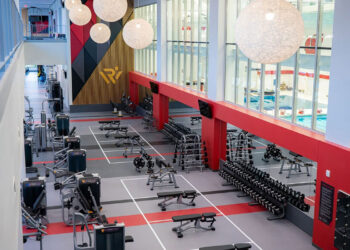
Rather than pursuing a facility overhaul, Murray State made targeted improvements aimed at refreshing the center. The majority of the decision was made directly from student feedback, while other aspects came from overdue maintenance.
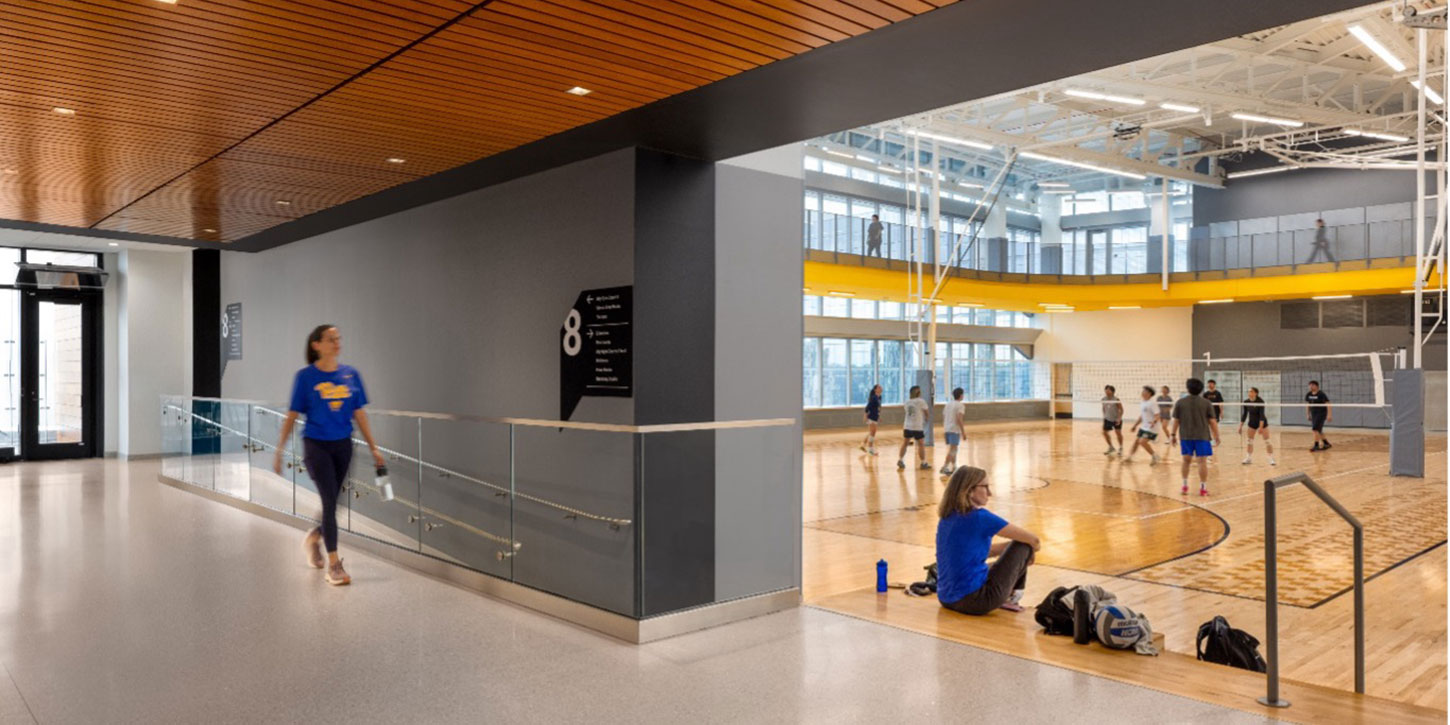
The project included replacing the 21-year-old equipment and addressing other deferred facility needs, like updated branding, hardwood floor refurbishment, new furniture, repainted court lines and swimming pool upgrades.
Rather than focusing on new amenities, the project allowed Murray State to address both the student experience and aging infrastructure.
Student use and input also drove UAH’s current renovation, along with general maintenance concerns. In this project, the University Recreation team needed to decide if the existing pool still served the needs of students and members, and the answer was clear.
Rather than maintaining a space simply because it had traditionally been part of the facility, the team looked at usage patterns, operation costs and the changing needs of its campus population.
“After years of collecting data, looking at numbers and listening to what the students want here on campus, we decided it made the most sense for us financially to close the pool,” said Sabrina Belue, the director of University Recreation at UAH. “Over the last couple of years, we’ve seen an influx in students and a decrease in community members, and they’re the ones who were using the pool more. These days, students don’t really care about the pool that much.”
In the renovation, which is currently on track to be completed by late 2026, the pool will be filled in and converted into a secondary weight room featuring squat racks, cable machines, a turf training zone and more. The building will also receive updated branding and various maintenance projects, including roof and window replacements.
Like Murray State, UAH’s project isn’t centered on creating a new facility but on making a specific area work better for the students the department serves.
“We studied the usage of the pool, how much it costs to run it and what it would save us long-term by moving to a space like an additional weight room, and there’s a big upfront cost,” said Belue. “After that, it’s really just equipment maintenance and maybe an additional staff member.”
This analysis illustrates why looking beyond the initial price of a renovation is important.
Cihan Ozdemir, the vice president of sales for DynaDome, said evaluating lifecycle costs, not just upfront costs, is vital when planning a new build or renovation. “Energy consumption, mechanical systems, maintenance, downtime and the facility’s ability to adapt should all be part of the comparison,” he explained.
Interested in bringing year-round flexibility to your recreation facility? Visit dynadome.com.
For campus rec leaders, this means making more strategic decisions when it comes to renovation planning.
According to Sara Boyer, a principal architect at Moody Nolan, that means departments need to think beyond the immediate project and consider how an investment fits into the university’s goals.
“Phased implementation is a strategy for achieving long-term vision through a series of smaller, manageable investments,” said Boyer. “A thoughtful, long-term approach allows institutions to maximize available resources, minimize disruptions and create facilities that remain relevant for years to come.”
Learn more about Moody Nolan’s approach to recreation design.
Phasing can also allow departments to address their most pressing needs first without waiting for the resources required to complete an entire facility transformation. For campus rec teams, that can make a long-term vision more manageable while limiting the disruption to students using the facility.
But even the most carefully planned renovations still have to attempt to account for an unpredictable factor: what students will want five or 10 years from now.
Student interests and recreation trends are constantly evolving. A space designed around one specific use today may need to accommodate something entirely different in the future. This makes flexibility another important consideration in both renovations and new construction, and one Boyd had seen firsthand.
“Universities are investing in adaptable, future-flexible spaces that can evolve alongside student needs, wellness programming and emerging technologies,” said Boyer. “An investment in overhead power-operated volleyball nets facilitates operations and changing over of courts quickly, as one example.”
The goal of having flexibility isn’t to predict the next trend but to make sure the facility can respond adequately when something new arrives — or a past trend comes back around. Flexibility can also expand who uses a facility in the first place.
“A variety of spaces invites people into the facility who may not normally visit a recreation center,” said Emily Parris, an associate principal and architect at Sasaki. “Alongside more common programming like basketball courts and pools, we’re also seeing more mindfulness spaces and multi-purpose rooms that can be adapted to meet recreation trends.”
Want to learn more? Visit www.sasaki.com/practice/services/architecture/.
This highlights another consideration for leaders — along with preparing for the future, designing for flexibility creates more opportunities to serve students with different interests.
The examples from Murray State and UAH demonstrate that successful renovations — and ones meaningful for students — don’t necessarily mean starting from scratch. For some departments, it may look like replacing aging equipment. For others, it means repurposing an underused space or addressing deferred maintenance.
The common thread is intentionality through understanding what students need, determining how existing spaces are being used and making investments that provide value beyond the immediate project.
Campus rec as a whole has shifted in recent years, evolving from facilities designed primarily to house programs to departments helping to shape the collegiate experience as a whole.
“Success is no longer defined by the number of courts or fitness equipment, but by how effectively these spaces support student belonging, wellness and campus culture,” said Boyer.
As campus rec and its patrons continue to evolve, the facilities supporting that mission need to evolve with it. The most successful renovations may not be the biggest or most expensive, but the ones that understand what students need now, anticipate how those needs could change and make strategic use of available resources.