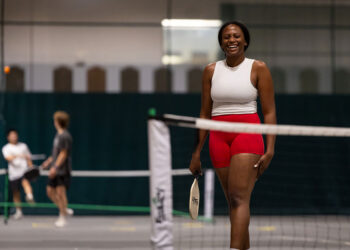



New sports, tournaments and student feedback helped to reshape RecWell’s intramural program into a fun, welcoming environment for all.
Intramural sports have long been an essential branch of campus recreation. Whether it’s a traditional game like flag football, a newer addition like pickleball or a table tennis tournament, intramurals are a great way to add an element of friendly competition to campus rec.
Inclusivity at the Forefront
At the University of Idaho, Recreation and Wellbeing’s (RecWell) intramural sports program strives to be as inclusive as possible with many options for students to choose from — including volleyball, bracketology, corn hole, tennis and more.
Peyton Teevens, the Intramural and Youth Programs coordinator for RecWell, has been using his first semester working with RecWell to update the sports offered in the program and give it a more inclusive feel.
“I’m hopeful that revamping the sports will allow a fun and fresh program for all participants,” said Teevens. “The narrative when I arrived was uber-competitive and Greek life-oriented. I’m doing my best to spin that narrative into an all-inclusive and fun environment to participate and socialize.”
Teevens started making changes during the second session of intramurals, adding kickball and dodgeball, which have both seen some new sign-ups. While not much has changed so far, he’s hopeful for the spring semester to see a positive jump in participation.
Through partnerships with various local businesses, RecWell will offer a variety of tournaments in the spring — from broomball at a nearby ice rink to a billiards league at a downtown pub. Teevens is also introducing a tournament week, featuring one-day tournaments all week long, as well as planning to experiment with drop-in play for a few sports.
The Importance of Student Feedback
Assessing student interest is vital for increasing engagement with intramural sports. Teevens said his most successful strategies include surveying student groups and word-of-mouth communication. Talking directly to students helps prepare them for upcoming sessions and allows Teevens the opportunity to ask how they feel about current offerings.
For other campus rec professionals looking to revamp their intramural sports program, Teevens’ advice ranges from listening to students to being flexible.
“My main piece of advice would be to embrace change,” he said. “I feel systems have been put in place and people don’t want to change what’s been efficient, but we live in a world that’s constantly evolving and changing. We need to be flexible with the interests and events these new students are wanting.”
When thoughtfully programmed with students’ interests in mind, intramural sports can be a great way for campus rec departments to not only increase engagement but also foster a sense of community and belonging among students.